Drive climate action further and faster – Climate Group’s manifesto for the 2024 EU elections
The upcoming European Union (EU) elections will take place against a backdrop of multiple economic, security and geopolitical challenges the bloc has faced: the Covid-19 pandemic, the Russian invasion of Ukraine that has, in part, driven a European cost-of-living crisis.
These external shocks have led to some EU countries re-intensifying fossil fuel production and rowing back on prior commitments. However, that is a mistake. This is the exact moment to accelerate climate action and reinforce climate and environmental policies to safeguard against external developments that can impact energy security, cause price hikes and drive inflationary pressures.
The EU has shown leadership to date in taking action to fight climate change. With its flagship initiative, the European Green Deal, it aims for a climate neutral and circular economy. However, the implementation of these policies has seen backlash from differing groups. For example, farmers have taken to the streets in many EU member states, in part, protesting against climate related regulations and their concerns about the impact on their livelihoods.
In the face of external crises and internal protests, Europe is risking undermining the positive steps it has taken. In April 2024, a draft EU priority list for the next five years was leaked to the media, with climate change references all but absent, even though more than half of European voters believe the fight against climate change is a priority (Euronews-Ipsos, 2024).
There can be no rowing back on the urgent action that is needed. The only sustainable path forward is to accelerate and intensify climate action. In the context of the upcoming election, we call on the EU to:
Deliver now: Implement already adopted legislation to create new jobs, boost the global competitiveness of the EU and raise living standards
The EU must deliver on its climate commitments. It’s not just good for the planet: it’s about creating jobs, addressing the rising cost of living and establish Europe as a global green economic powerhouse. Businesses also need long term clarity on the EU’s emission reduction trajectories and details on the policies and investments that will help them play their part.
In the global race to net zero, the EU can’t afford to slow down at a time when other power blocs like the US and China are speeding up investment in low-carbon technologies, job creation and infrastructure. Setting a climate target of at least 90% emissions reduction by 2040 (compared to 1990) would support investment and drive deployment at scale and with speed.
Lead with ambition: Accelerate the transition to climate neutrality by setting out roadmaps for key industries and sectors to speed up investment
The recent EU Climate Advisory Board report highlighted that more efforts are needed to achieve the EU’s climate objectives from 2030 to 2050, particularly in buildings, transport, agriculture and forestry.
The EU should set ambitious - but deliverable - targets, backed by an industrial strategy that builds on the EU’s existing leadership and creates a framework for creating green jobs.
Six concrete steps to drive delivery, ambition and leadership
To meet these aspirations, there are specific sectoral actions the EU can take immediately:
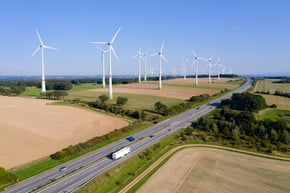
- Ramp up the installation and production of renewable electricity
- Accelerate the transition to electric vehicles (EVs)
- Support EU industries in reducing emissions while remaining competitive
- Continue promoting energy efficiency and achieve resilient net zero buildings
- Shift diets and demand across the food chain to reduce emissions
- Enhance the role of states and regions (subnational governments) to meet net zero
In 2023, the EU secured a record share of renewables in its electricity mix, at 44%. While this is to be commended, alongside the record annual growth in wind generation, more must be done to ensure the EU is Fit for 55 and demonstrates world-leading ambition.
With an ongoing energy crisis, we call on EU lawmakers to ensure an affordable path to a future powered by renewables. This will require a rapid scale up of existing clean technologies like wind, solar, alongside significant investment in solutions and infrastructure across all sectors of the economy.
As a first essential step towards climate neutrality, the EU should phase out all direct and indirect fossil fuel and environmentally harmful subsidies, and tax oil industry profits in line with the “polluter pays” principle. These funds should be redirected to support a socially just and climate neutral Europe and achieve Europe’s climate goals.
Leaders should set targets and timelines for phasing out fossil fuels and set a 100% renewable electricity system by 2035. That is a hard deadline, which needs to include commitments to phase out industrial usage of fossil fuels in sectors like steelmaking, chemicals, and concrete.
To electrify key sectors of the economy with renewable energy, the EU needs to support a robust grid infrastructure across the continent. While we phase out fossil fuels and electrify and decarbonise power systems, it is also crucial to upgrade and reinforce grids to ensure that they are fit for managing an efficient use of renewables, by storing energy when production is high and releasing it when it is low. Finally, green hydrogen from renewable energy and e-fuels should be reserved to harder to abate sectors, such as steel, maritime and aviation, where direct electrification is still not possible.
A fully decarbonised energy system, based on renewables like wind and solar, will bring economic and social benefits and lead to cheap green energy supply that will provide competitive advantage for European industries. Domestic renewable sources will also provide European countries with greater energy security and resilience against growing international challenges.
Climate Group's RE100 initiative is the global renewable energy initiative bringing together hundreds of large and influential businesses committed to using100% renewable electricity by 2050.
The EU recognises that transport emissions need to come down by 90% across the bloc by 2050 to meet climate targets. Transport accounts for about a quarter of the EU's greenhouse gas emissions. Three-quarters of these come from road transport, so switching to EVs is vital for the environment, air quality and the health of the EU’s citizens.
However, confidence in EVs is being tested, and recently sales of EVs have stagnated. We’re also seeing that EVs are increasingly weaponised as a tool in the culture wars – from the cost of upgrading to EV from petrol and diesel for the everyday driver to worries of widespread job losses at existing ICE vehicle manufacturing centres, and even fears that the push to EVs hands China, as an EV manufacturing superpower, an economic advantage over European automakers.
Policymakers need to look to the examples set by leading businesses who’re investing heavily in switching their fleets to EVs – the future of the EU’s Road transport is electric, and supportive measures are needed.
EV100 and EV100+ initiatives show companies have made massive investments for the decarbonisation of their fleets. To be successful, they need a stable regulatory framework and the right infrastructure to support their efforts. Full implementation of current legislation, including roll out of charging infrastructure, as required by AFIR, as well as increased supply of electric vehicles are critical for companies to electrify their entire fleet.
The goal of phasing out the sale of new petrol and diesel cars and vans by 2035 should not be undermined and it should be reinforced with a mandate on corporate cars to be 100% electric by 2030.
The EU should not get distracted with inefficient and costly technologies to decarbonise the road transport sector. Electrification is the best environmental and economic solution. E-fuels technologies should be reserved for harder to abate sectors, such as maritime and aviation.
The role of EVs as “batteries on wheels” needs to be maximised by removing barriers and incentivise smart charging and Vehicle-to-Grid/Home/X connections.
While the Regulation on CO2 emission standards for heavy-duty vehicles (HDVs) goes in the right direction, current targets are not enough to keep Europe on course to reach the 2050 climate neutrality goal. We therefore call to increase the 2030 CO2 emission reduction target and to set a phase out on the sale of combustion engine trucks by 2035. Revised targets will ramp up the production of zero tailpipe emission vehicles, giving confidence of assured supply to businesses.
EV100 is a global initiative bringing together companies committed to accelerate the transition to electric vehicles (EVs) and make their entire light commercial vehicles fleet zero emission by 2030.
EV100+ is a global initiative bringing together companies committed to zero-emission medium and heavy-duty trucks by 2040.
ZEV Community enables best practice exchange between different levels of governments to accelerate vertical integration of policies to reach zero emissions transportation.
Heavy industry is a significant contributor to emissions in the EU. The production of steel and concrete currently contribute 5.7% and 4% of total EU greenhouse gas emissions, respectively. Decarbonising these industries is therefore vital for the EU to deliver on its climate targets.
Competition to be the leading market for low emission steel and concrete is also speeding up. Geopolitical energy-related shocks have led to significant EU production cuts, turning it from a net steel exporter into a net steel importer over the past decade. In the next legislature term, it’s crucial that the EU delivers on the green transition of energy-intensive industrial sectors by supporting uptake of low emissions production technologies in sectors like steel and concrete.
The EU’s climate leadership and the role of EU companies in main industrial sectors give the EU a unique opportunity to establish global standards and best practices.
The EU cannot afford to take a step back. It is essential to reinforce the Green Deal Industrial Plan to ensure that policies support sectors that will drive decarbonisation of heavy industry through incentives, investment support and product standards. While changes to the EU Emissions Trading Scheme (ETS) are already driving decarbonisation across industry, free allowances need to be removed on schedule by 2034, and the ETS extended to cover products where steel and concrete account for a significant percentage of the product materials.
The EU Carbon Border Adjustment Mechanism (CBAM) is groundbreaking – but it won’t succeed if it doesn’t also drive action in Europe. Europe can be a leader in low emission steel and concrete, but it won’t happen without a level playing field and a commitment to deliver the necessary investment in facilities and clean energy networks that will power them.
We need to see more investments in cost-effective and safe solutions, such as circular economy as well as material and energy efficiency measures in key directives, including Ecodesign and Public Procurement. This needs to be backed by clearer rules on emissions reporting for industrial products across the supply chain, as well as Green Public Procurement on emissions reporting of products used in the public sector.
Climate Group drives low carbon industry innovation through SteelZero and ConcreteZero initiatives.
SteelZero members are committed to buy and use 50% lower emission steel by 2030 and 100% net zero steel by 2050.
ConcreteZero members are committed to use 30% lower emission concrete by 2025, 50% by 2030 and 100% net zero concrete by 2050 at the latest.
Buildings are responsible for 40% of energy consumption and 36% of greenhouse gas emissions in the EU. Increasing renovation rates also improves energy security, saves money, creates jobs, and improves health and wellbeing.
Currently however, EU renovation rates to make buildings more energy efficient are around 1% each year, meaning the EU has less than six years to get to the 2.5% annual renovation rate that the IEA says needs to be achieved by 2030 to be on track for net zero. Those are huge steps to take, and the EU needs to speed up action.
Energy efficiency has a vital role to play in lowering energy demand, reducing emissions and driving the clean energy transition. It can not only cut emissions but also save businesses billions, considerable reduce energy bills for households while creating clean jobs, guaranteeing a winning solution to all.
The cheapest and greenest form of energy is energy you don’t use. The EU should continue promoting and investing in energy efficiency measures in line with “energy efficiency first” principle as it is crucial to achieve energy security, energy sovereignty, health, and wellbeing, reducing energy poverty and improving air quality, bringing further health improvements.
EP100 is a global corporate energy efficiency initiative bringing together over 120 ambitious businesses committed at improving their energy efficiency.
To date, EP100 members have reduced their emissions by 395 million metric tonnes of CO2e, more than the current annual emissions of the UK and Belgium combined.
Last year alone, EP100 members reduced 54.4 million metric tonnes of CO2e, that’s equivalent to the emissions from the electricity consumed by 10.5 million homes in the US.
Reducing the emissions intensity of food supply chains is critical to achieving our goal of a net zero Europe by 2050. The Farm to Fork Strategy is at the heart of the European Green Deal, aiming to make food systems fair, healthy and environmentally-friendly.
While there is much focus on the production side of food supply chains, focussing on the demand side will also bring big impacts in terms of emission reduction. Governments have tremendous purchasing power that can shift both demand and diets, through their own procurement of food (for e.g. schools, offices) as well as utilising procurement as a lever for less emissions-heavy food. The effect of a shift in diet towards more plant-based proteins, can have an equal if not bigger effect on emissions of food, then agricultural production measures or transport. Besides emissions savings, a more balanced diet also brings healthier people and a healthier planet.
Using the procurement power of governments will also help food supply chains shift away from business as usual, driving new technologies, increasing public awareness and demand for sustainable food, which will benefit all stakeholders.
We urge the EU to set minimum mandatory criteria for sustainable food procurement while ensuring food security, affordability, nutrition and public health. This will promote procuring reduced emissions food for government institutions and schools, as well as help the shift to sustainable diets and increase demand for reduced emissions food.
Climate Group’s food system is our newest programme aiming at reducing emissions from food supply chains, focusing on (subnational) government food procurement and related policies, by doing so, creating alternative demand for food and help shifting diets at customer and consumer level.
Subnational governments are critical to deliver on the ground impact. UNDP estimates that 50 – 80% of mitigation and adaptation actions are or will be taken at the subnational level. Investing in subnationals means investing in a level of government that has the most significant mitigation potential of any non-state actor group. If states and regions from 10 major-emitting economies around the world fully implemented all their existing commitments, they could mitigate an additional 1.2GtCO2e/year (representing roughly 1.5%–3% of total emissions attributable to human activity) in 2030 in addition to national government policies.
In the EU, states and regions are calling for alignment of the climate, biodiversity and sustainable development goals agenda to support the European Green Deal. From the perspective of providing much needed interconnectedness between EU level decision making and communicating those decisions to citizens and communities, regions are acutely tuned into broad social sentiment in the EU. The recent farmers' protests serve as a warning that lack of public support for green policies in key sectors risks stalling progress. In that regard, there is a need to supplement the Green Deal with mechanisms to protect the most vulnerable, considering the strengths of subnational governments to act in that local and regional interest. Giving states and regions a stronger role in the design and governance of the Green Deal would help governance.
This will help European regions to continue developing, testing, and delivering the climate policies and solutions needed to achieve the shift to climate neutrality while supporting EU to become the first climate neutral continent. Given, most EU climate and environmental laws will be implemented by local and regional governments, their leaders will become strong ambassadors for transformative and just climate action.
It is important therefore, that local and regional governments are considered strongly in the upcoming submissions of Member-States’ Social Climate Plans. Not pursuing the development of robust stakeholder engagement plans that place importance on the role of states and regions will be a lost opportunity for the incoming EU leadership.
Climate Group acts as secretariat to the Under2 Coalition - the largest global network of states, regions, provinces, and other subnational governments committed to achieving net zero emissions by 2050 at the latest.
One of the founding members of the Under2 Coalition is the German State of Baden-Württemberg and the Coalition now has over 40 states and regions from the EU in its network.
These are incredibly important elections, through which the EU will decide to push ahead with climate action or take its foot off the pedal.
For most Europeans, climate is a crucial issue - it underpins many of the other concerns the EU faces, and it can’t be put on hold while politicians look to secure their seats for the next Parliament. Deprioritising the environment now would be a huge mistake, and cause economic uncertainty for companies, governments and citizens.
From the energy we use to the cars we drive and the buildings we live and work in, even the food we eat – greater focus on all of these things will ensure the EU maintains its position as a climate leader on the global stage and ensure it meets its own climate targets too.
Jeroen Gerlag, Head of Climate Group Europe