

Exploring the central role of food in climate solutions at Climate Week NYC 2025
This year at Climate Week NYC, Food had a prominent seat at the table
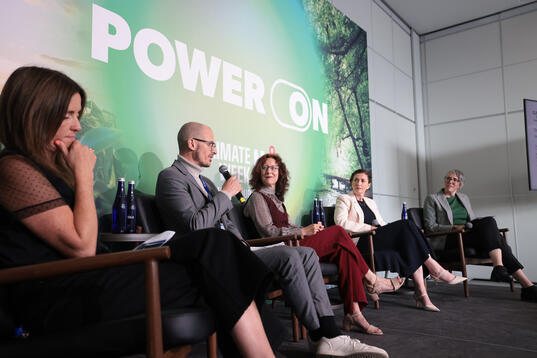
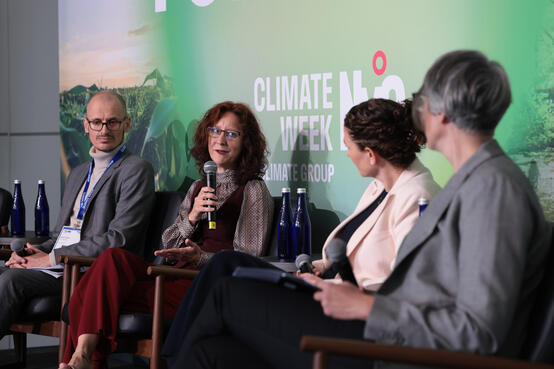
Climate Group hosted a panel discussion at The Hub Live ‘The future protein economy - one bite at a time’. The session unpacked the latest trends, policy shifts, and breakthrough innovations shaping the future of protein. Expert panellists explored how investors, policymakers, and businesses can accelerate the protein transition to sustainably build a resilient, low-carbon food system that meets global demand.
After launching last at year’s Climate Week NYC, we were thrilled to have Tilt Collective join us as our Food Program Partner this year. Tilt Collective also organised their own ‘Food Day 2025’ at Climate Week NYC.
The central role of food in climate solutions
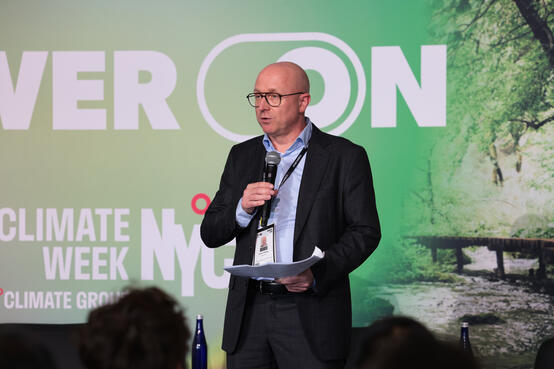
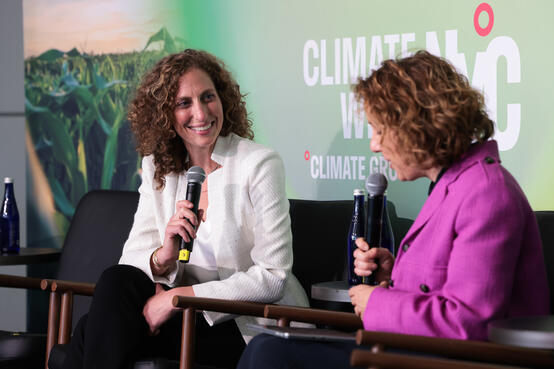
In a fireside chat with our CEO Helen Clarkson, Sarah Lake, CEO of Tilt Collective, underscored the central role of food in climate solutions. “Food alone accounts for 30% of emissions - it’s critical to climate solutions. If we win on climate but not on food, food security, and farmers, then we’re not winning at all.”
Tilt Collective’s work focuses on driving systems to change and working with companies and governments to offer more sustainable foods, namely more plant-based, whole foods.
Unlocking alternative proteins sources is key to moving to a plant-forward food system. Legumes, such as chickpeas and beans, plant-based meat, fermentation-derived proteins, and cultivated (lab-grown) meat, can significantly mitigate climate change, as they require substantially less land and water, and generate fewer GHG emissions. They also bring better health in many cases, and can bring economic benefits for governments working on their food procurement policies.
The power of governments
Food procurement is critical to developing a more sustainable food system.
Governments can use purchasing power to shift sustainable standards, procurement can shift market demand for healthier, low-carbon foods; levelling the playing field.
Jasmijn de Boo, CEO of ProVeg International, urged that, whilst there has been progress, at the national level “we need more governments and companies to invest in alternative proteins”.
As procurement happens at a more local -level, the panel highlighted the “great potential for subnational governments to get involved”. By working schools, prisons and businesses to increase plant-based options, we can catalyse the alternative protein demand in these areas.
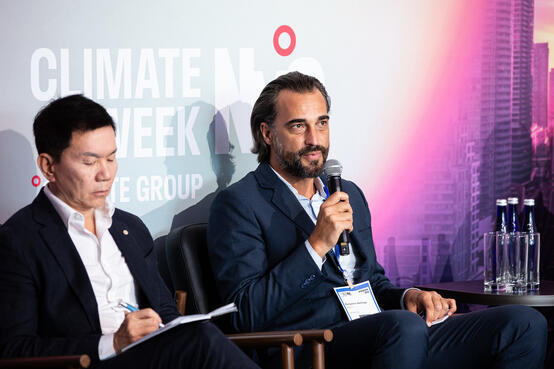
Investing in a plant-forward future
From a philanthropic perspective, food funding offers a huge opportunity.
The panel explored how, for every dollar invested in food systems, it unlocks five times more emissions reductions than renewable energy. Further, investing in alternative proteins could support 83 million jobs by 2050.
This untapped opportunity makes shifting toward alternative proteins hugely economic beneficial for governments, businesses, and society as a whole.
Food made a splash across the city
Over 100 events across New York City focused on Food: from volunteer food repacks with City Harvest, to climate comedy shows and cooking classes.
Food Tank hosted an exciting Climate Week NYC event series. More than 300 luminary speakers, chefs, journalists, academics, CEOs, farmers, and Broadway came together for a week-long series of delicious food, powerful conversations, and unforgettable performances. Key topics included scaling regenerative agriculture with collaboration, “Food is Medicine and Eating for Health”, the power of Food Entrepreneurship and developing solutions to global hunger. Tilt Collective's Food Day was visited by hundreds of experts from the food system.

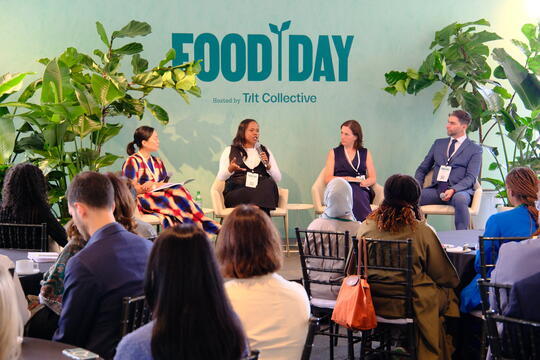
Events at Tilt Collective's Food Day 2025