

The future of Food
In the weeks leading up to Climate Week NYC 2025, we focused our attention to ‘Food’ and the future protein economy.

"If the climate community doesn’t tackle food, we won’t solve climate change.”
"Food is one of the most powerful climate solutions we have. If the climate community doesn’t tackle food, we won’t solve climate change.”
Shifting to a plant-rich food system is a triple win, yielding better health, stronger economies, and a safer climate.
Lisa Sweet, Director of Private Sector Engagement at Tilt Collective explains why food system change is essential to tackle the climate crisis, and how partnering with Climate Group for Climate Week NYC offers a key platform to bring together actors who can drive this shift.
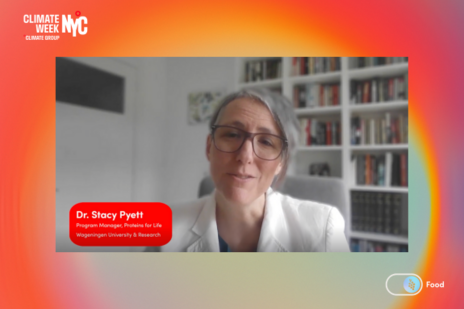
Dr Stacy Pyett discusses the protein transition
Achieving a diet shift for consumers is key for accelerating the protein transition. But how can we encourage consumers behaviour to choose the more sustainable option? “What doesn’t work is telling people what to eat.” Dr. Stacy Pyett, Program Manager, Protein for Life at Wageningen University & Research, highlighted three ways that industry, policy makers and retail can support the public in making the sustainable choice.
⭕ Change the default food option – 60% - 70% of people take the default food option
⭕ Invite people to connect with their own values about food without shame or blame
⭕ Change the food environment and context in which we make choices – what's at eye level in a supermarket makes a difference

Jasmijn de Boo highlights just how important what we eat is for the planet and our health
Only 5% of US adults and children are eating enough fibre, which is largely obtained from plant-based sources.
That’s a wake-up call for both public health and our planet.
A shift toward a plant-forward diet offers a powerful solution to the fibre gap – boosting health through diverse nutrients and essential fibre, while significantly reducing emissions and supporting climate goals.
Jasmijn de Boo, CEO at ProVeg international, highlights just how important what we eat is for the planet and our health.
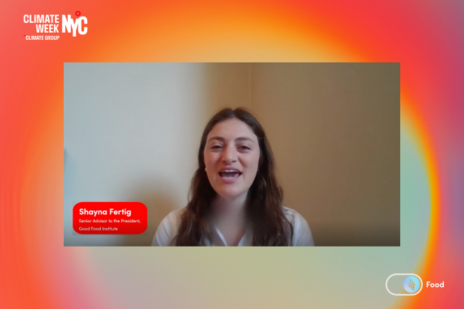
"Alternative proteins could support 83 million jobs by 2050"
Did you know: alternative proteins could support 83 million jobs, globally, by 2050?
Alternative proteins are meat made from plants, cultivated from animal cells, or produced via fermentation. A shift toward alternative proteins and plant-forward diets will not only create millions of jobs but is essential for the food system to stay limit carbon emissions and stay within planetary boundaries.
Shayna Fertig, Senior Advisor to the President at The Good Food Institute outlines the huge economic benefits that come from shifting toward alternative proteins, highlighting how, of all methane interventions in the food system, shifting from conventional meat to alternative proteins yields the best economic results.