

#EVLearnings with… Ingka GroupWorking to overcome your EV challenges? Think local, invest and innovate
1 July 2025, 14:03 UTC | 3 min read
In this new series, members of our influential EV100 network of electric fleet pioneers share key insights from the first phase of their EV transition. Here, IKEA’s largest retailer, Ingka Group, explores how a dedicated project implementation manager for each country has helped them overcome challenges – and why innovative, local solutions are key.
As the largest IKEA retailer in 31 countries, Ingka Group firmly believes that we have a crucial role to play in transforming our own operations and advocating for an urgent transformation of the transport sector. An important part of that is to set ambitious climate targets, as this creates momentum towards a transition to a net-zero society. As part of our commitments validated by the Science Based Targets initiative, we are on the path towards halving our emissions by 2030 and becoming net zero by 2050. This means we need to cut CO2 emissions in all stages of our value chain – including customer home deliveries.
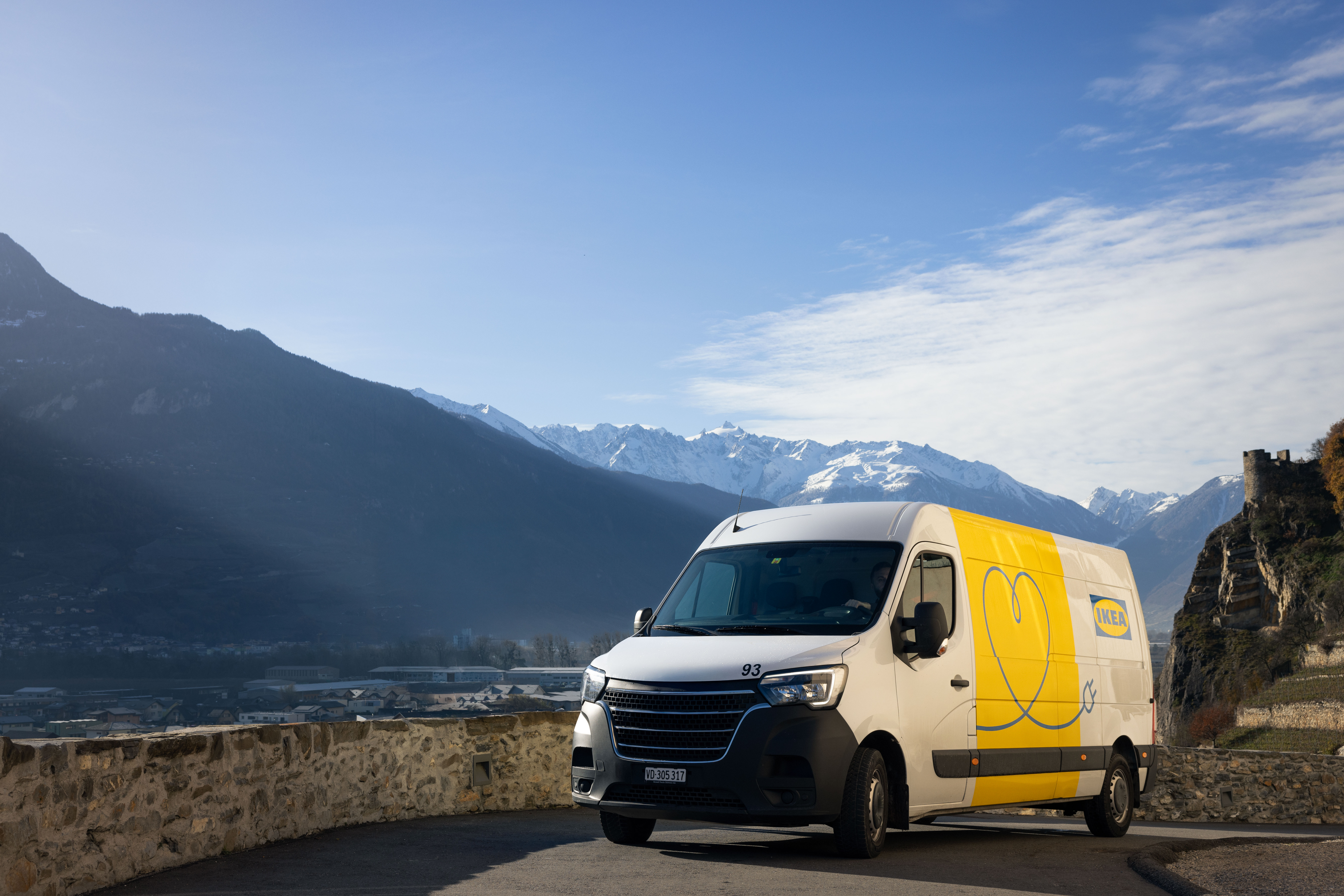
We have set a global target to achieve more than 90% of home deliveries made by zero emissions vehicles by 2028. Globally 41.1% of retail home deliveries (over 6.3 million deliveries), were made by zero emission vehicles in financial year 2024, up from 24.6% from the previous year. Today IKEA products are delivered 100% emission free across 20 cities, in 300+ IKEA locations by more than 2500+ electric vehicles.
During our journey we have worked with several obstacles, including a lack of charging infrastructure, differing local policies and a limited range of freight electric vehicles (EVs). To overcome our challenges, we have introduced a dedicated project implementation manager working on deliveries in each of our retail countries. To overcome lack of charging infrastructure, we invest in our own charging infrastructure and also work with local partners on deployment.
In every country, IKEA teams are looking for innovative new ways to deliver to our customers with localised solutions including electric cargo bikes in parts of Italy and Germany and electric three-wheelers in India and Australia. We are also looking beyond our own operations, by advocating for policy change to overcome barrier and enable quicker adoption society-wide. We will continue to collaborate with our partners and advocate for wider societal change to accelerate the transition to zero-emission transport, together with partners like EV100.
Ingka Group electric vehicle policy asks:
- Set ambitious targets for zero emission vehicles and phase-out new sales for internal combustion engines, cars, and vans by 2035. Simultaneously ensure that zero emission transport options are available, convenient, and affordable for all.
- Encourage and promote zero emission urban mobility (e.g. EVs), sustainable mobility policies, and alternative fuels such as green hydrogen and sustainable biofuels for long haul transportation.
- Increase the provision of reliable, affordable, and seamless charging infrastructure powered by renewables for zero emission vehicles for urban mobility and long-haul transportation. Include requirements for distance based and fleet based (charging per amount of hybrid/EV vehicle) targets to deploy charging infrastructure.
The way people live has changed drastically in the last decade, resulting in a significant increase of online shopping and home deliveries. We knew that the only way to meet our customers in a sustainable way was to invest in the zero-emission vehicle transformation, to reduce GHG emissions, air and noise pollution, and traffic congestion.
Zero emission deliveries represent the future of retail.
*
This thought leadership piece was contributed by Ingka Group as part of the EV100 relaunch. EV100 is Climate Group’s global network of corporate leaders driving the transition to zero-emission road transport.
Through the year, #EVLearnings are exclusive to EV100 members via the Members Hub.