







There is a better mix for concrete.

Blended cement cuts carbon in construction – and it’s ready to use today.

Partners

Concrete builds our world

Concrete is essential to our lives, from constructing homes, roads, water infrastructure and flood protection, to building the wind farms and grids the energy transition depends on.

Most of the buildings and infrastructure that will exist in 2050 have yet to be built – so changes must be made to concrete’s ingredients today to avoid locking in global emissions for decades to come.

We can cut carbon in construction now

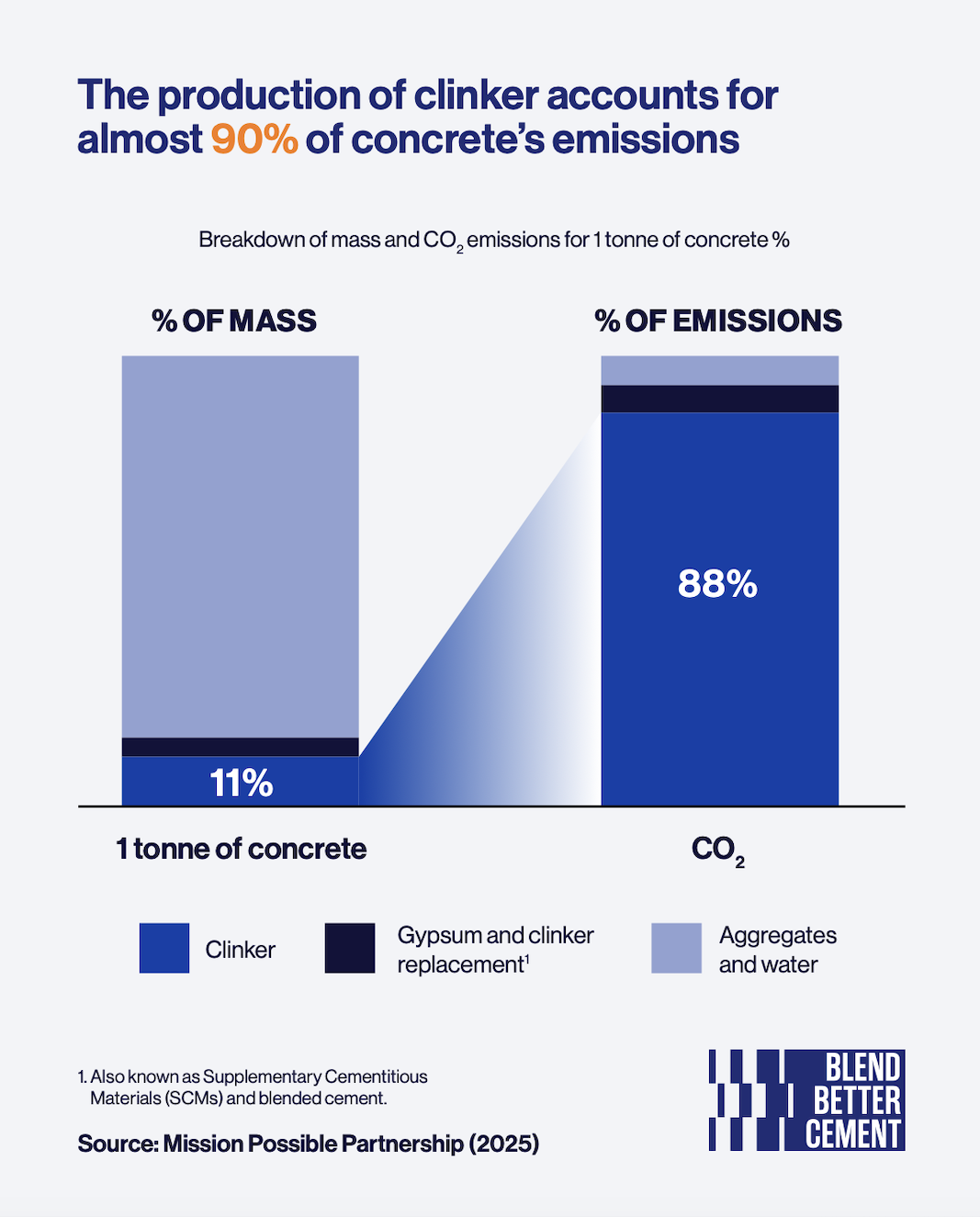
Blended cement can achieve 50% lower emissions per tonne compared to ordinary cement1, with comparable strength, durability and cost – just from using less clinker, a carbon-intensive ingredient that has traditionally given cement its binding properties.

Blended cements can play an important role in reducing emissions, alongside other solutions that support more sustainable construction.

1 Ordinary Portland cement (OPC), which consists of ~95% clinker.
We’re asking governments to support the switch to blended cement – and unlock green industrialisation, meet growing building demand more sustainably, and strengthen domestic supply chains using locally available materials.

Champion countries of Blend Better Cement

“Blended cement with natural supplementary cementitious materials is one of the most scalable near-term levers to decarbonise cement and concrete this decade. As ICBC co-chair, France is proud to back Blend Better Cement.”
Monique Barbut Minister of Ecological Transition | Ministry of Biodiversity and International Climate and Nature Negotiations, France

Why now?

Demand for new homes and infrastructure is rising fast. Every decision we make about the materials we use for the buildings we construct today will influence emissions for decades to come.

The solution is ready. Blended cement is proven, available and can cut emissions at scale today.

Countries around the world are already making the switch.