


EP100 Member Case StudyCundall
Multi-disciplinary engineering consultancy, Cundall, halved employee absenteeism at its London office after implementing energy efficiency and wellbeing measures – saving US$117,000 in one year.
Cundall is a founding signatory to the WorldGBC’s Net Zero Carbon Buildings commitment, one of three EP100 commitment pathways. Under this commitment, the company set an ambitious goal to occupy only net zero carbon buildings by 2025.
Smarter energy use is a key part of the company’s carbon reduction strategy and is proving to be good for business.
Cundall has lowered its energy bills by 16%, through:
- Demand-driven ventilation with smart controls responding to occupancy levels
- Smart lighting with infrared occupancy detection
- Lighter materials and flooring to improve natural daylighting
"We’ve been thrilled to see such a positive impact on our business and employees. There are huge gains on offer from energy efficiency, but not enough companies are seizing the opportunity – we want to help change that."
Simon Wyatt, Sustainability Partner, Cundall
These measures have also improved working conditions for employees – enhancing performance and lowering absenteeism.
This is important to Cundall as a pioneer in the use of the WELL Building Standard,10 a performance-based system for measuring, certifying, and monitoring features of the built environment that impact health and well-being.
In Cundall’s London office, absenteeism dropped by 50% in the first year, compared to the 25% UK average for a new office. This translates to financial savings of US$117,000.
There was a 25% reduction in staff turnover, saving as much as US$158,000.
Influencing the wider sector:
At 21 Moorfields in London, a world-class commercial office space with sustainability at its heart, measures include:
- High efficiency LED lighting
- Occupancy and daylight controls
- High efficiency boilers and chillers
- Variable speed pumps and drives to manage energy flow
As well as demonstrating best practice across its own offices, Cundall has also been working with clients to develop landmark levels of sustainability performance in their buildings.
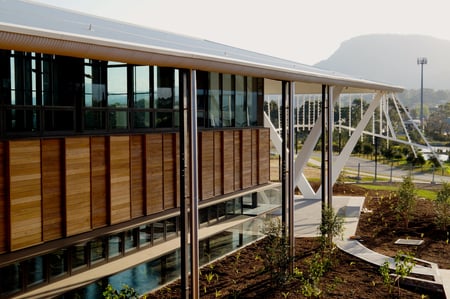
The University of Wollongong’s Sustainable Buildings Research Centre is heralded as one of Australia’s most sustainable buildings. It has a H-shaped design to optimise natural ventilation, daylight access, and the use of thermal mass (the ability to absorb and store heat).
To find out more, please download the 2020 EP100 Annual Progress and Insights Report