

%20(2)-Jun-18-2026-10-39-21-6037-PM.png)
Next Generation Budgets
Aligning public budgeting with climate neutrality goals and helping to unlock financing at subnational level
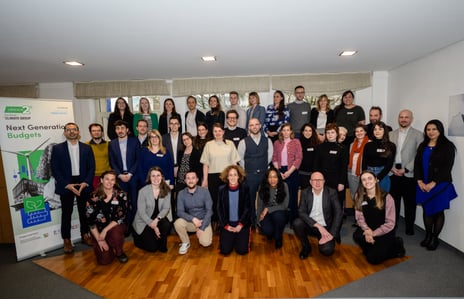
About the project
Next Generation Budgets is a project led by Climate Group, in partnership with the Government of North Rhine Westphalia and funded by Stiftung Mercator.
With the budget cycles at the heart of how every organisation implements its climate commitments, greater understanding and expertise are urgently needed to make green budgeting a success at the subnational level. At the same time, exploring ways to increase finance and attract investment to enable state and regional governments to meet their climate goals are paramount this decade.
Through Next Generation Budgets, state and regional governments from Europe and the United States of America receive technical training to green their budgets in collaboration with Expertise France, the French public agency for the design and implementation of international technical cooperation projects. They also take part in a community of practice to improve and learn ways to unlock finance for their climate action, in collaboration with the Institute of Climate Economics (I4CE).
Why are we working with states and regions on green budgeting?
Effective green finance holds the key to the transition to net zero by 2050 and a world of greater prosperity for all.
How governments use climate finance is a statement of intent and can be a powerful tool to reach mitigation and adaptation goals, but also to adapt to a changing climate in the most cost effective and equitable way.
One way to turn climate commitments into funded and measurable actions across subnational government is to implement a green budget. However, often climate is not a key element in budgetary discussions. Although many states and regions have set climate neutrality goals to be reached by 2050, regional public spending and purchasing do not always deliver on climate action. Governance systems can slow down progress and subnational governments often lack the necessary space to learn and test how using green budget approaches can achieve climate targets and help unlock finance.
Next Generation Budgets aims to fill that gap and it’s the first Under2 Coalition international project looking at subnational green budgeting.
-Jun-18-2026-10-39-06-2294-PM.jpg?width=464&height=309&name=next-generation-budgets-Climate%20Group%2025482%20-%20Under2%20-%20Next%20Generation%20Budgets%20-%20Report%20-%20Social%20Media%20Card%20Website%20(4)-Jun-18-2026-10-39-06-2294-PM.jpg)
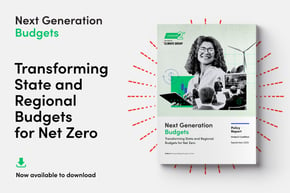
Transforming State and Regional Budgets for Net Zero report
Our report draws on lessons from 11 pioneering states and regions across Europe and the United States. It provides practical tools such as green budget tagging, a method used to tag environmental expenditure that integrates climate and environmental considerations into government budgetary processes. Key recommendations include creating a cross-department task force, developing a transparent classification system for budget tagging and piloting green budget tagging in key sectors.
Download the report in Italian, German, or Spanish. To access the English version, please fill in your details below.
How we're driving change
This is a trusted space for building a shared vision, encouraging knowledge retention and circulation, and learning tools to move from planning to implementation. Governments will identify and select top challenges and areas of interest they wish to focus on around green finance and external investor engagement.
Green budgeting means using the tools of budgetary policymaking to help achieve environmental and climate goals. Next Generation Budgets’ technical training on green budgeting is made of 5 online modules, complemented by an in-person workshop.
To help participants secure a ‘whole of government’ approach to mainstream climate action in key government ministries and agencies, all governments have set up internal Next Generation Budgets taskforces, to ensure cross ministerial coordination throughout the project.
Creating trailblazers
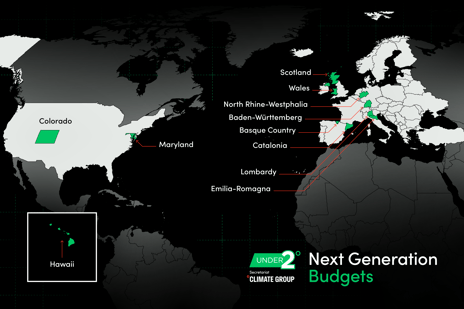
Next Generation Budgets works with 11 states and regions from Europe and United States with ambitious net zero emissions targets.
Next Generation Budgets governments will be Under2 Coalition trailblazers in mainstreaming green budgeting practices and in making their regions fit for climate investments.
Together, they are working to develop green budgeting practices while supporting sustainable growth and prosperity.
Participating governments
"By joining the Next Generation Budget initiative, we combine efforts with strong partners to stay on course for net zero. We seek to unlock the potential of Green Budgeting to better align the budget with our climate goals."
- Dr. Danyal Bayaz, State Minister of Finance, Baden-Württemberg
Baden-Württemberg is committed to achieve climate neutrality by 2040, with at least 65% reduction in emissions by 2030 compared to 1990 levels. While acknowledging the role of every sector to achieve these goals, the state sees public administration as a key driver of this transition and is targeting climate neutrality within its own operations by 2030.
The state’s budget is a central to reaching climate neutrality and Ministry of Finance has taken important steps toward this goal, by issuing Green Bonds since 2021 and the passage of the Sustainable Financial Investment Act by parliament in March 2023.
The Ministry of Finance believes the budget reflects the policies of the state and provides the financial basis for their implementation. To align spending with climate targets, the Ministry emphasizes the importance of assessing the environmental impact of budget items—prioritizing low-carbon investments and reconsidering those that increase CO2 emissions. Green budgeting in Baden-Württemberg can provide key information for prioritizing expenditure.
As part of this effort, a decentralised climate and environmental ‘tagging’ exercise has been conducted by line ministries where budget items that contribute positively to climate, environment and nature conservation goals have been identified. The next step is refining the approach by developing a tagging methodology.
In 2024, Baden-Württemberg joined the Next Generation Budgets and an EU Technical Support Instrument (TSI) project to:
- Increase transparency: Assess the climate and environmental impact of public spending.
- Support budgeting decisions: Provide additional insights to guide budget planning.
- Improve policy coherence: Ensure climate goals are integrated into budget processes.
Early Results include:
- Green budget methodology development: Baden-Württemberg aims to finalize a regional methodology by 2026, recognizing that there is no ‘one size fits all’ model. In 2025, the state plans to add a “not aligned/brown” category, supported by a tailored list of harmful expenditures. A pilot will test the approach using selected budget items. To ensure buy-in, the process aims to minimize bureaucracy.
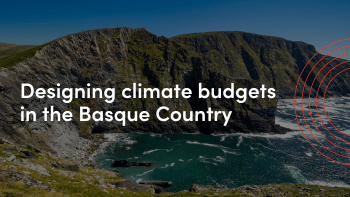
"The Basque Government is firmly committed to more efficient climate action. Since the 2024 Basque Energy Transition and Climate Change Act, 2.5% of the Basque Country's General Budget shall be allocated to climate action measures. Participating in the Under2 Coalition's 'Next Generation Budgets' project will help us to establish criteria and methodology, and to gain insight to engage other stakeholders on green budgeting tools. It is a great opportunity for the Basque Country to receive technical training and be part of a community sharing experiences with other regions."
- Josu Bilbao, Vice Minister of the Environment, Basque Country
About Catalonia
Catalonia’s climate strategy is anchored in the 2017 Climate Change Law and the current Nationally Determined Contributions (NDCs) with commitment to 29% emissions reduction by 2030 (from 1990 levels ). The regional government has allocated over €363 million (2023–25) in Climate Fund grants to support local mitigation and adaptation projects. This ranges from low-carbon mobility and water efficiency to nature-based flood defences and heat-resilience in public spaces.
In 2022, Catalonia embedded environmental and climate considerations into its regional budget, thanks to collaboration between the Ministry of Economy and Finance, the Climate Change Office, and a panel of experts. This working group designed and implemented Catalonia’s own methodology for tagging green expenditure – a method that has since been refined.
The region is also investing in climate risk assessments, policy appraisals, and evidence-based evaluation, with the aim of generating evidence on which policies work better in the climate and environmental area and integrating this scientific evidence into the decision-making process. In 2024, it published the first issue of “What Works Against Climate Change”—a series collecting research and evaluation to guide impactful climate policy.
Catalonia joined Next Generation Budgets in 2024 to:
- Ensure policy intergration - to incorporate the climate and environment considerations into the life cycle of public policies.
Early results include:
- Budget integration: By integrating climate and environmental perspective into the budget cycle, environmental impact are now quantified during budget preparation and execution. The results are compiled in the Climate and Environmental Perspective Report, which since 2022, accompanies the annual budget bill and is now legally mandated. This is achieved through a modification of the Consolidated Text of the Public Finance Law. The next step entails the integration of this perspective into budget requests, ensuring it also serves as a reference during budget negotiations.
- Tagging methodology development: Catalonia’s current methodology, is influenced by international frameworks like the Rio markers, and quantifies green expenditure. For climate change mitigation and adaptation. Work is underway to expand the current green budget tagging to include negative (brown) and green expenditures using a weighted or typological approach. undefined categories using a weighted approach.
- Institutionalization of green budgeting: The Catalonian government conducts regular public policy evaluations and expenditure reviews, gathering evidence on the effectiveness of current climate policies. The state is preparing the next digital issue “What Works Against Climate Change’ , focusing on policies that improve residential energy efficiency. An interdepartmental working group is also being formed to lead green budgeting and capacity-building efforts.
- Interdepartmental collaboration: Catalonia carries out public policy evaluation and expenditure reviews to gather evidence on the effectiveness of current climate and environmental policies. The state is expected to publish a new issue of “What Works Against Climate Change”, focusing on policies that effectively improve energy efficiency in the residential area, and will be accessible on their website. An interdepartmental working group between the Department of Economy and Catala Office of Climate Change is also being formed to lead green budgeting implementation and capacity-building workshops for climate-focused units.
About
About Emilia Romagna
"As an island state, Hawaii is ground zero for climate change. Adopting a green budgeting process is a pivotal step toward a sustainable future. We are excited to join this project to enhance our green budgeting strategies, secure sustainable financing, and attract private investment."
-Governor Josh Green, M.D, Hawaii
Hawai‘i has one of the most ambitious climate frameworks in the U.S., legally committing to reduce greenhouse gas emissions by 50% by 2030 (from 2005 levels) and become carbon negative by 2045, as set out in Acts 32 (2017), 15 (2018), and 238 (2022). These targets are backed by the Hawai‘i Clean Energy Initiative, which mandates 100% renewable electricity by 2045. The state has also passed laws to decarbonize transport, improve energy efficiency, and cap emissions from major sources. While Hawai‘i does not have a formal green budgeting framework, climate priorities are embedded in the state budget through line items and special funds—most notably the recently approved "Green Fee" on tourism, expected to raise $100 million annually for resilience projects. This integrated approach supports mitigation and adaptation across infrastructure, natural resources, and vulnerable communities. Hawaii joined Next Generation Budgets - Green Budgeting training course to learn about green budget tagging and chart a roadmap to start with implementation.
The main barriers that Hawai’i was facing at the start of their journey were lack of familiarity with green budgeting tools and competing priorities within the state budget. However, the team was quick at identifying windows of opportunities for action: for example they can count on colleagues in key departments who are willing to take opportunities to integrate green budgeting such as including green budgeting in two state climate plans currently in development. The state aims to achieve 1) a better understanding of how Hawaiʻi defines “green” budget items, 2) clarity on how much of State budget is spent on climate change and 3) Increased transparency and alignment of funding to match climate action priorities. Implementation plans for 2025-26 include:
-
Integration of green budgeting principles into policy making: Green budgeting has been incorporated in Hawaii Department of Transportation's Draft Energy Security & Waste Reduction Plan as an Administrative Strategy to reduce emissions.
"The green budgeting will be a tool to orient investments, consumption and the taxation system to green priorities, assessing their impacts on the economic and social system, climate change and environmental protection. By joining Next Generation Budgets project, Lombardy can benefit from training and international peer learning on these issues."
-Giorgio Maione, Minister of Environment and Climate, Lombardy
Lombardy is Italy’s most populous and economically powerful region. Lombardy has adopted a multi-pronged climate mitigation approach anchored in its Regional Energy, Environment & Climate Programme, with a long-term vision to become a net zero emissions region by 2050.
The region has also adopted its first regional Climate Law, updating its Adaptation Strategy, and deploying sectoral tools from energy efficiency and renewable (via accessing € 600 million in EU funds (ERDF 21-27) for circular-economy, low-emission heating, energy efficiency and renewable energy systems) to green public procurement. Since 2024, Lombardy and Baden-Württemberg, have continued to receive assistance from the Technical Support Instrument (TSI) - the EU programme that provides tailor-made technical expertise to EU Member States to design and implement reforms - to develop and integrate transparent green budget tagging into its budget cycles. The region aims to align annual budgets with these priorities - cataloguing environmentally harmful subsidies, ringfencing green infrastructure, and tracking procurement contracts - positioning Lombardy as a trailblazer for subnational green budgeting in the Under2 Coalition.
In 2024, Lombardy joined Next Generation Budgets, complementing its TSI program to:
- Acquire knowledge: Learn more about green budgeting and increase civil servants knowledge in this area.
- Peer-to-peer learning: Learn from international peers on ways to develop a regional methodology for green budget tagging
- Better collaboration: Increase internal cross-sectorial cooperation, monitoring of expenditure and knowledge on how to orient investments.
Early results include:
- Development of a green budget methodology: A tagging methodology is in development to cover climate action and broader EU taxonomy areas. It includes mapping resources and establishing an environmental lens for financial reporting to improve accountability.
- Institutionalization of green budgeting: An inter-departmental working group brings together various policy areas. Regular meetings gather input and assess the current state of the budget cycle, laying the foundation for using green budgeting in strategic planning.
- Internal training and awareness: Workshops and seminars are being held to embed green budgeting in routine practice—making it a core tool for policymakers and public officials.
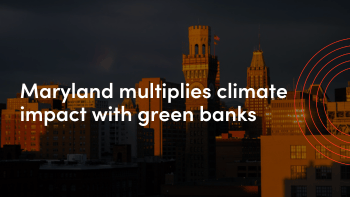
Maryland, a mid-Atlantic state bordered by the Chesapeake Bay and Atlantic Ocean, has established bold climate targets under the Climate Solutions Now Act of 2022—aiming to reduce greenhouse gas emissions by 60% from 2006 levels by 2031 and to achieve net-zero emissions by 2045. To help realize these goals, Governor Wes Moore committed $90 million to support the Act in 2024 and allocated over $300 million in the FY2025 budget, with half of those funds dedicated to supporting underserved communities (Office of Governor Wes Moore, 2024), as part of his priority to “Make Maryland a Leader in Clean Energy and the Greenest State in the Country”. Maryland also established the Climate Catalytic Capital Fund, dedicating $15 million over three years to de-risk clean energy projects and attract private investment, particularly benefiting low-income households.
Recent legislation allows green and blue infrastructure projects to access traditional financing and pay-for-success models, aiming to draw $100 million annually in private investments to advance a range of environmental priorities.
While Maryland’s Department of Budget and Management does not currently apply climate or GHG tagging to budget line items, the state does track GHG emissions at the population level, meaning it monitors emissions generated across sectors—such as transportation, buildings, and energy—on a per capita or state-wide basis to inform policy and measure progress toward climate goals. At the start of the 2023 fiscal year, the Maryland Department of the Environment began annually tracking state agency spending on greenhouse gas (GHG) reduction efforts. However, coordination between the Department of the Environment and the Department of Budget and Management remained an area in need of improvement. As a result, aligning climate and budgetary teams has become a key focus of Maryland’s efforts since joining the Next Generation Budgets initiative in 2024. The state also aims to apply the green budgeting skills gained through the project to meet regulatory requirements for identifying annual spending on mitigation measures, and more broadly, to inform strategic decision-making on future climate funding and investments. Currently, outdated fiscal software that does not allow for tagging and limited staff capacity remain a challenge. Financial officers do not (yet) have the knowledge or ability to identify ‘climate’ spending without close consultation with project and program managers. Early results of this effort include:
-
Cross-departmental coordination
-
Maryland’s Next Generation Budgets taskforce meets periodically to discuss the next steps of their green budgeting strategy.
-
This task force includes the Maryland Department of the Environment (MDE), Maryland Department of Budget & Management (DBM), and the Comptroller of Maryland.
-
-
Long-term plans
-
Financial officers do not yet have the knowledge or tools to identify climate-related spending without close consultation with project and program managers, and limited staff capacity remain key challenges.
-
Maryland is working on a new financial management system, as the current outdated software does not support tagging.
-
The Next Generation Budgets taskforce is working to make sure green budget tagging is incorporated in this new system over the next 3-5 years.
-
-
Short-term plan:
-
Interim strategies are being considered to advance a climate financing plan and green budgeting over the near future
-
DBM and MDE are working together to improve the state’s annual GHG spending analysis in 2025, enhancing coordination between agency program staff and fiscal officers.
-
Maryland is also considering piloting 1-2 methodologies learned through Next Generation Budget curriculum to better understand which might work best in their context.
-
"To achieve net zero, we have to rapidly boost investments in climate-neutral infrastructure and technology. The Next Generation Budgets project is key to more climate action on a regional level."
-Mona Neubaur, Deputy Minister President, North Rhine-Westphalia
About Scotland.
About Wales

-Jun-18-2026-10-39-15-2727-PM.png?width=350&height=197&name=next-generation-budgets-Scotland%20(1)-Jun-18-2026-10-39-15-2727-PM.png)

-Jun-18-2026-10-39-16-5459-PM.png?width=350&height=197&name=next-generation-budgets-Untitled%20design%20(1)-Jun-18-2026-10-39-16-5459-PM.png)
-Jun-18-2026-10-39-17-9273-PM.png?width=350&height=197&name=next-generation-budgets-Scotland%20(2)-Jun-18-2026-10-39-17-9273-PM.png)
Project funder
Next Generation Budgets is funded by Stiftung Mercator, a private and independent foundation with extensive scientific expertise and practical project experience. Through its work, it strives for a society characterized by openness to the world, solidarity and equal opportunities.
Project technical partner
Expertise France is the French cooperation public agency and the second largest technical cooperation agency in Europe. They led the EU Green Budgeting Training project (2021-2024) with twenty-four Members States and the EU Commission. As a partner of Next Generation Budgets, Expertise France delivers the project’s Green Budgeting Course.
Project technical partner
Institute for Climate Economics (I4CE) is a non-profit research organization that provides independent policy analysis on climate change mitigation and adaptation. As a partner of Next Generation Budgets, I4CE contributes to the Community of Practice on increasing finance and investment for climate action.
Project technical partner
Edge Effects is an agency that designs and facilitate participatory processes and programmes. Climate Group are happy to welcome them to the project to support with our in-person workshop and other meetings of the Community of Practice.
News | 18th September
Subnational governments align budgets with climate goals
-Jun-18-2026-10-39-10-3397-PM.png?width=290&height=200&name=next-generation-budgets-EU%20header%20image%20(4)-Jun-18-2026-10-39-10-3397-PM.png)
News | 17th March
Next Generation Budgets workshop: Advancing subnational green budgeting and investment roadmaps
News | 13th March
Next Generation Budgets Inaugural Workshop - Keynote Speech
News | 10th October
Next Generation Budgets Project: Greening subnational public finance
News | 14th November
Paving the way for successful subnational green budgeting
%20(1)%20(1)_0-Jun-18-2026-10-39-09-2756-PM.png?width=290&height=200&name=next-generation-budgets-NGB%20logo%20(updated)%20(1)%20(1)_0-Jun-18-2026-10-39-09-2756-PM.png)
Basic page | 10th January