


"Our EV transition is part of something bigger"
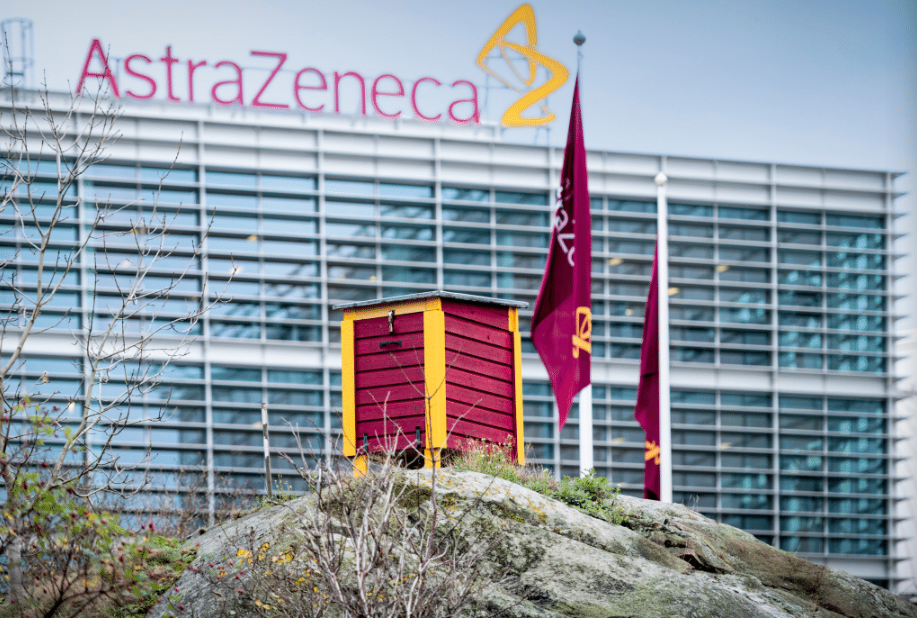
The global pharmaceutical company decided to go faster than most when it set out to electrify its global fleet of more than 22,000 vehicles. With over 80% of its vehicles now zero-emission, this pioneering EV100 member is running a fleet that’s battery-electric by default, and fully electrified in 37 markets. What are the secrets to its success? And what’s next?
When AstraZeneca set out to cut its Scope 1 and 2 emissions by 98% by 2026 (from a 2015 baseline), its 22,000+ vehicle fleet quickly became a priority. With sales teams traveling extensively to reach healthcare professionals, road transport accounted for over 14% of its global Scope 1 and 2 footprint.
To achieve its ambitious decarbonisation goals, the company recognised that petrol and diesel vehicles had little place in its future. But how does a company operating in 60+ countries across six continents electrify its fleet?
A market-by-market approach to transitioning a global fleet
To understand the challenges and what was needed to achieve its ambitious plans, AstraZeneca listened – at a local, regional and global level. Which processes would have to be put in place to facilitate a swift transition? What needed to be true to proceed?
Globally, AstraZeneca could build on its previous "green fleet" project, which transitioned many vehicles to hybrid between 2015 and 2020. But the company quickly decided to go beyond this: from 2022, it prioritised battery electric vehicles (BEVs) – ahead of EV100’s 2025 decision to exclude plug-in hybrid electric vehicles (PHEVs) from the commitment criteria.
Speed was a key feature from the beginning. AstraZeneca joined EV100 in 2019, with the ambition to switch to a fully battery electric fleet where technically feasible by 2025. Just three years later, the company celebrated its first fully electric fleet, in the Netherlands. In the same year, Japan hit the 50% mark. It was the first AstraZeneca fleet with over 1,000 vehicles to reach this milestone. As markets across Europe and Canada started crossing the same threshold, the company began transitioning in other countries.
At the core of the strategy was a rigorous market assessment. The company asked: Could an employee fulfil their role with an EV, relying on existing charging infrastructure, supplemented with local or home charging? If the answer was "Yes", then the employee would need to switch to an EV, and if the same were true for everyone in the same market, then that market would need to transition to 100% battery electric. An effective new dynamic took hold.
"Four out of every five of our AstraZeneca vehicles is now a BEV and we’re leading the pharma sector in electrifying our fleet across the highest number of markets globally – helping to cut tailpipe emissions, improve air quality, and reduce our environmental impact. Our success comes from bold targets, science-backed action, and strong local leadership."
Liz Chatwin,
VP, Global Sustainability and Safety, Health and Environment at AstraZeneca
EV leadership: bottom-up meets top-down
To drive a speedy transition across diverse markets – with varying vehicle availability, infrastructure, and policy landscapes – the company needed to develop a localised approach and put clear guardrails in place. Underpinning this approach was alignment across global business functions.
The transition was overseen by regional structures with centralised teams and strong senior leadership support.
Clear overarching targets combined with realistic market-specific expectations gave local teams direction and accountability to own their transitions. This enabled tailored approaches that reflected local contexts. Fleet electrification was embedded in senior managers’ annual objectives. Central support was important to facilitate conversations between local and regional stakeholders.
The road to 2025: hurdles faced and overcome
Initially, there were preconceptions about the operational effectiveness of EVs. The sales force was concerned that electrification might hinder its performance.
AstraZeneca responded with a major change management programme. At the heart of this was a comprehensive training offer: Q&A sessions with experts, test drives, explainers that demystified EVs, answered questions, and provided reassurance about the operation of an EV-centred fleet. The company also introduced dedicated funding for home charging.
The sales force quickly adapted to its new EV reality. "Is it very different compared to driving a fuel car?" is the most frequent question Kaisa Tamm, Baltic Innovation and Business Excellence (IBEX) Lead, gets asked when driving her EV. "Actually it’s not, the biggest change is in mindset," she says.
"EV100 brings together corporate voices to accelerate the transition to net zero through a supportive EV ecosystem. Driving change through collective action is essential – we recognise that no single company can achieve this transition alone. Our fleet electrification is part of a broader transformation that’s already underway."
Stuart Poore,
Executive Director, Climate & Nature Strategy at AstraZeneca
"At first it seems very weird," says Rūdolfs Rozenvalds, Biopharmaceuticals Sales Manager, Baltics. "It is not only the change in habits but also comprehension of the whole concept – in the beginning it feels like a toy or a gadget. Some moments later, internal combustion engine, fumes and noises seem something very primitive and archaic."
As AstraZeneca’s EV transition progressed in more markets, the company was able to share successes back to the global workforce – encouraging everyone to go faster.
Proud to be "BEV by default" – and a member of EV100
Seven years after joining EV100, AstraZeneca has made electrification the norm. By the end of 2025, all EU markets and the UK were fully electrified where technically feasible alongside international fleets in Indonesia, Türkiye and Taiwan.
Just three years on from the 50% milestone, Japan is at over 85%. And the company’s largest fleet, in the US, where over 5,000 vehicles are on the road, has exceeded 95%.
Counting the carbon benefits
By the end of 2025, AstraZeneca had achieved an 88% reduction in its Scope 1 and 2 greenhouse gas emissions from a 2015 base year. Its EV transition was a major contributor to this. In 2025, fleet emissions contributed 15.9 kTCO₂e – that’s just 17% of the 92.5 kTCO₂e the fleet was responsible for in 2015.
Where next?
With four out of five vehicles now zero-emission, AstraZeneca continues to set targets for markets with hybrid, petrol and diesel vehicles not yet switched due to external factors – supporting local teams to advance their transition whenever feasible.
Looking ahead, the company is exploring smarter charging, connected car data, and AI optimisation, which increasingly offers EV-centric fleets an even better understanding of how to maximise operational savings and minimise energy consumption.
As a member of EV100, the company continues to advocate and share expertise and best practice with peers, supporting the network’s government engagement to address barriers to the EV transition and infrastructure roll-out.
AstraZeneca’s journey has demonstrated that electrification is possible not only for low mileage personal vehicles, but for a high-mileage business operational fleet that spans the globe.