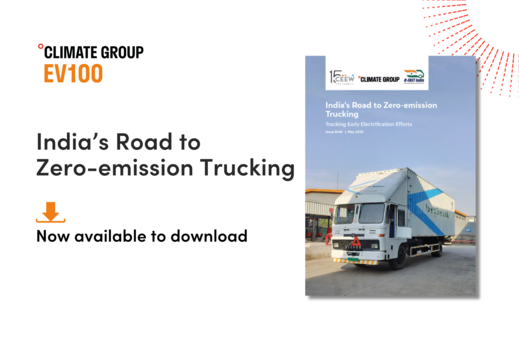
India relies heavily on medium and heavy-duty trucks (MHDTs) — especially diesel trucks — to carry its road freight. These trucks are responsible for around 45% of total on-road emissions in India, and contribute heavily to air and noise pollution. Zero emission trucks (ZETs), and in particular electric trucks, are a viable alternative to diesel variants. But their adoption is still early stage. With the Council on Energy, Environment and Water (CEEW), we've studied and documented how some Indian businesses are pioneering the use of electric trucks.
In this brief, we provide qualitative, on-ground evidence using seven case studies that have been selected for how they are using electric trucks, geographical spread across the country, and the ecosystem of stakeholders supporting them. The brief is informed by structured interviews with fleet operators, shippers, original equipment manufacturers (OEMs), logistics service providers (LSPs) and driver partners. We also evaluate the impact of increased electric truck adoption on employment in the sector and the occupational benefits of operating electric trucks for drivers. Recommendations to drive electric truck adoption have also been provided. Our key findings include:
- The MHDT sector can drive job growth: According to CEEW–Transportation Fuel Forecasting Model (TFFM), the MHDT fleet is estimated to increase from around 3.9 million units in 2024 to around 10.2 million units in 2050. The trucking sector is estimated to create approximately 30 million jobs by 2050, impacting over 111 million individuals, including people working in the industry and their households. The electric truck segment will host around 20% of the total trucking sector jobs.
- Electric trucks can enhance operational efficiency in the sector: Engagement among key stakeholders in the ecosystem - such as fleet operators, charge point operators, and LSPs emerges as the common factor driving the early transition. It has also fostered new businesses where stakeholders share risks through detailed contracts, exchange knowledge, and enhance peer learning through pilot initiatives.
Hence, the logistics operations are data-driven, inclusive, and optimised to improve the overall efficiency in the sector. - Electric trucks can reduce occupational stress and improve driver comfort: Drivers have access to advanced vehicle technologies such as clutch-free systems and real-time AI driving assistance. Improved infrastructure, with amenities such as washrooms and rest stops synced with charging downtime, are also provided. Drivers report overall job satisfaction, enhanced safety and comfort during long rides, and reduced fatigue and overall improvement in health.
For media enquiries, please reach out to ashrivastava@climategroup.org
India’s Road to Zero-emission Trucking Tracking Early Electrification Efforts.pdf
Size: 6.25 MB
Date added: 27/05/25
In 2024-25, Climate Group and The Council on Energy, Environment and Water explored how Indian businesses are leading the way in deploying electric trucks. Tune into this interview series to hear firsthand insights from these pilot projects.