


.jpeg)
Project overview
Building on the growing recognition from the UNFCCC and national governments, our Subnational Transition Plan project, funded by European Climate Foundation, is designed to spotlight the vital role that states and regions play in driving climate action.
This initiative aims to elevate subnational leadership by illustrating their impact in delivering on the goals of the Paris Agreement. By doing so, we seek to showcase tangible data points for securing lasting recognition of the value and contributions of subnational actors in shaping a resilient, low-carbon future.
.webp)
What is a Subnational Transition Plan (STP)?
A Subnational Transition Plan outlines a climate action roadmap or strategy that addresses mitigation, adaptation (resilience), and/or energy-related issues. It offers a more agile and responsive approach to national climate action plans, allowing local and regional governments to act on data, community needs, and emerging policy trends.
High ambition plans will align with the UNFCCC’s Integrity Matters principle and reflect areas of the below:
- Long-term GHG emissions reduction target, aligned with, or exceeding, national targets.
- Sectoral implementation and investment pathways across energy, transport, buildings, and land use, for a just transition towards a decarbonised economy.
- Commitment to transparency, including how the plan will be updated and how progress will be tracked - typically every 3–5 years.

Why take action?
Subnational governments are responsible for actioning up to 80% of the adaptation and mitigation activities needed to secure a net zero and climate resilience future. States and regional administrations hold the implementation power to turn climate policies into tangible climate actions.
Through this project, subnational governments are demonstrating credibility. Together they now call for:
- Direct access to international climate finance funds
- Support in capacity building for developing and implementing plans
- Better tracking of subnational contributions by the international community
- National governments to elevate multilevel action
Case Studies
View more ›Case Studies

Building Climate Resilience in Rio Grande do Sul: Vice Governor Gabriel Souza on ProClima2050
We sat down with Gabriel Souza, Vice Governor of Rio Grande do Sul, to hear how the state is tackling its most pressing climate ch...
Read more.webp)
Taraba State, Nigeria
Taraba State has drafted its first Climate Change Policy and Action Plan. The plan is currently in parliament pending approval and...
Read more.webp)
Minas Gerais, Brazil
"Multilevel governance and climate federalism are central to our approach. In alignment with this spirit, we’ve developed a Subnat...
Read more
Santa Fe’s Roadmap for a Just Transition: Minister Enrique Estévez on Climate Action from the Ground Up
Ahead of the Climate Summit 2025, we spoke with Enrique Estévez, Minister of Environment and Climate Change of Santa Fe, Argentina...
Read more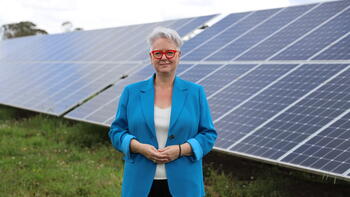
Accelerating the Energy Transition in New South Wales: Minister Penny Sharpe on the State’s Subnational Transition Plan
As the most populous state in Australia, New South Wales (NSW) is at the heart of the country’s climate response. We spoke with Pe...
Read more