

Rapid urbanisation is driving unprecedented demand for infrastructure and housing across South and Southeast Asia (SSEA). India contributes around 8% of global CO₂ emissions, while Southeast Asia accounts for a further 4–5%. Emissions in Vietnam, Indonesia and India rose by 106%, 63% and 49%, respectively, between 2014 and 2024. How we build today will shape future emissions. This makes a shift to low-carbon materials, design innovation and resource-efficient construction essential.
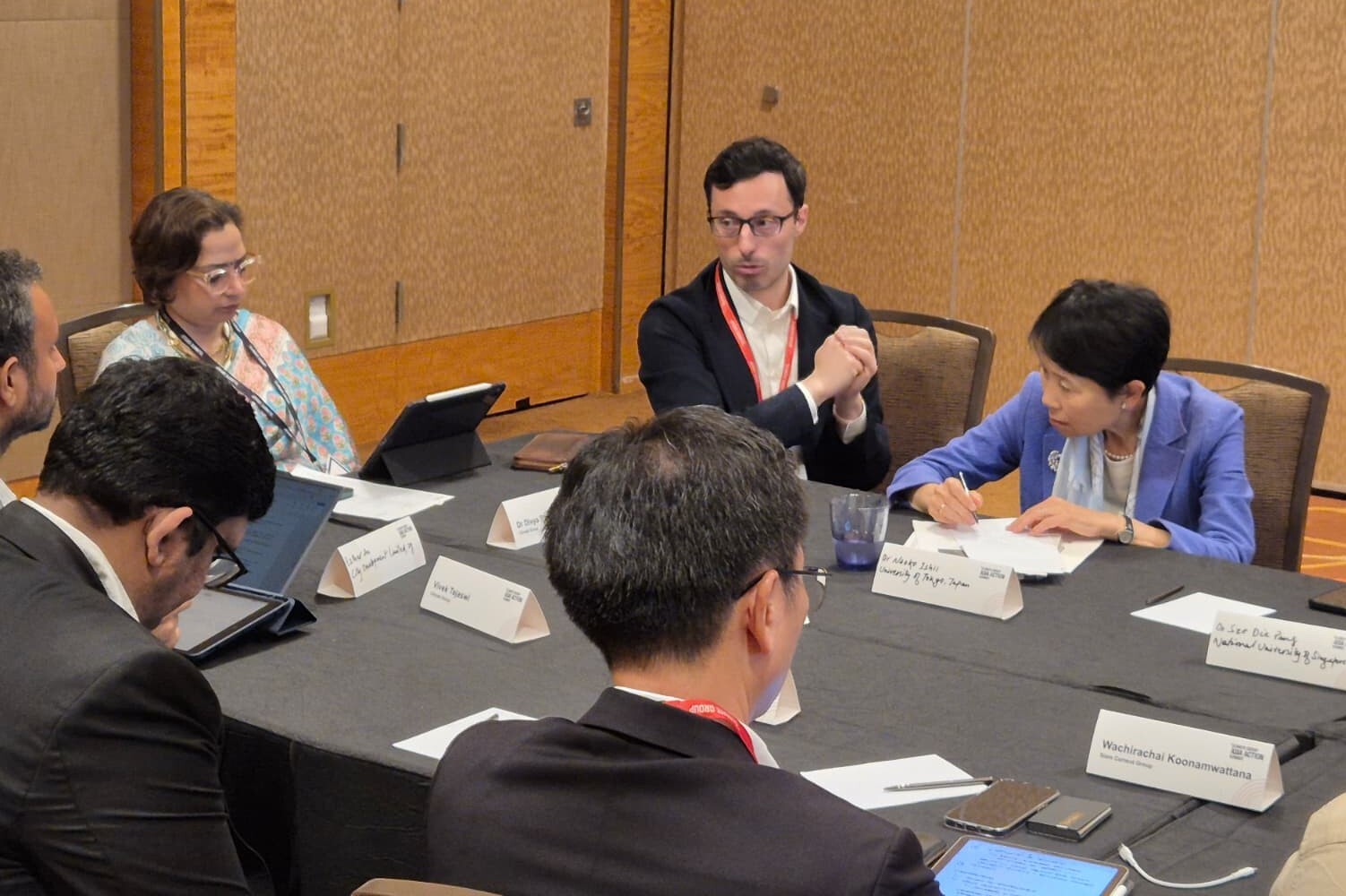
At the Climate Group Asia Action Summit earlier this year, we convened leaders and experts from the construction sector in India, Singapore, Vietnam, Thailand, Indonesia, South Korea and Japan. They included cement manufacturers, developers, policymakers and civil society. Their focus: explore the transition from fragmented, one-market approaches to shared regional standards and collective ambition. Big takeaways were:
Embodied carbon remains invisible to the people who matter most
Even as operational emissions have grown, embodied carbon in construction materials is still not widely understood across the sector, particularly by end-consumers. Building awareness among developers, contractors, homeowners and financiers is as important as materials innovation.
Procurement frameworks and policy can build market confidence
Aligned procurement frameworks, transparent benchmarking mechanisms and enabling policies will be essential for suppliers and developers to commit to low-carbon alternatives at-scale.
Emerging approaches on embodied carbon standards in Singapore and procurement policy efforts in Indonesia are examples of what coordinated public–private action look like.
While technology is ready, confidence is lagging
Low-embodied-carbon material innovation is advancing. In India, knowledge dissemination and implementation experience has progressed around solutions like Limestone Calcined Clay Cement (LC3), which can cut CO₂ emissions by 30-40% compared to Ordinary Portland Cement (OPC). But wider adoption in markets like South and Southeast Asia requires market confidence in material performance, supply chain readiness and commercial scalability.
Pilot projects are the most effective near-term solution for validating performance under country-specific construction practices and local climatic conditions, giving developers and contractors the precedent they need to start adopting low-carbon materials.
Bringing the value chain together is essential
Stronger communication across the concrete value chain - from clay suppliers and cement manufacturers to concrete producers, developers and government departments - can help stakeholders share information, understand their roles and coordinate. It can also help translate technical developments and climate action into messages that are easier for wider audiences to understand.
Value chains need to work together, not in isolation
Low-carbon construction will need stronger collaboration across the concrete value chain, from suppliers and manufacturers to developers, policymakers and financiers. Working across markets can help create stronger demand for low-carbon materials and connect supply with growing regional demand. Countries like India, Indonesia and Thailand can help serve this demand through supply chain-supporting markets such as Singapore.

Way forward
The discussion surfaced four immediate priorities:
- Establishing a dedicated regional forum for ongoing dialogue between supply- and demand-side stakeholders committed to accelerating low-emission construction pathways.
- Mapping viable supply chains for low-emission concrete materials and identifying key actors who can support regional market development, particularly for major demand centres like Singapore.
- Expanding embodied carbon benchmarking to Vietnam, Thailand and India by building on emerging initiatives from Singapore.
- Using cross-border partnerships to bring governments, businesses, financial institutions and civil society together to set ambitious net-zero goals, share knowledge and coordinate action across the region.