

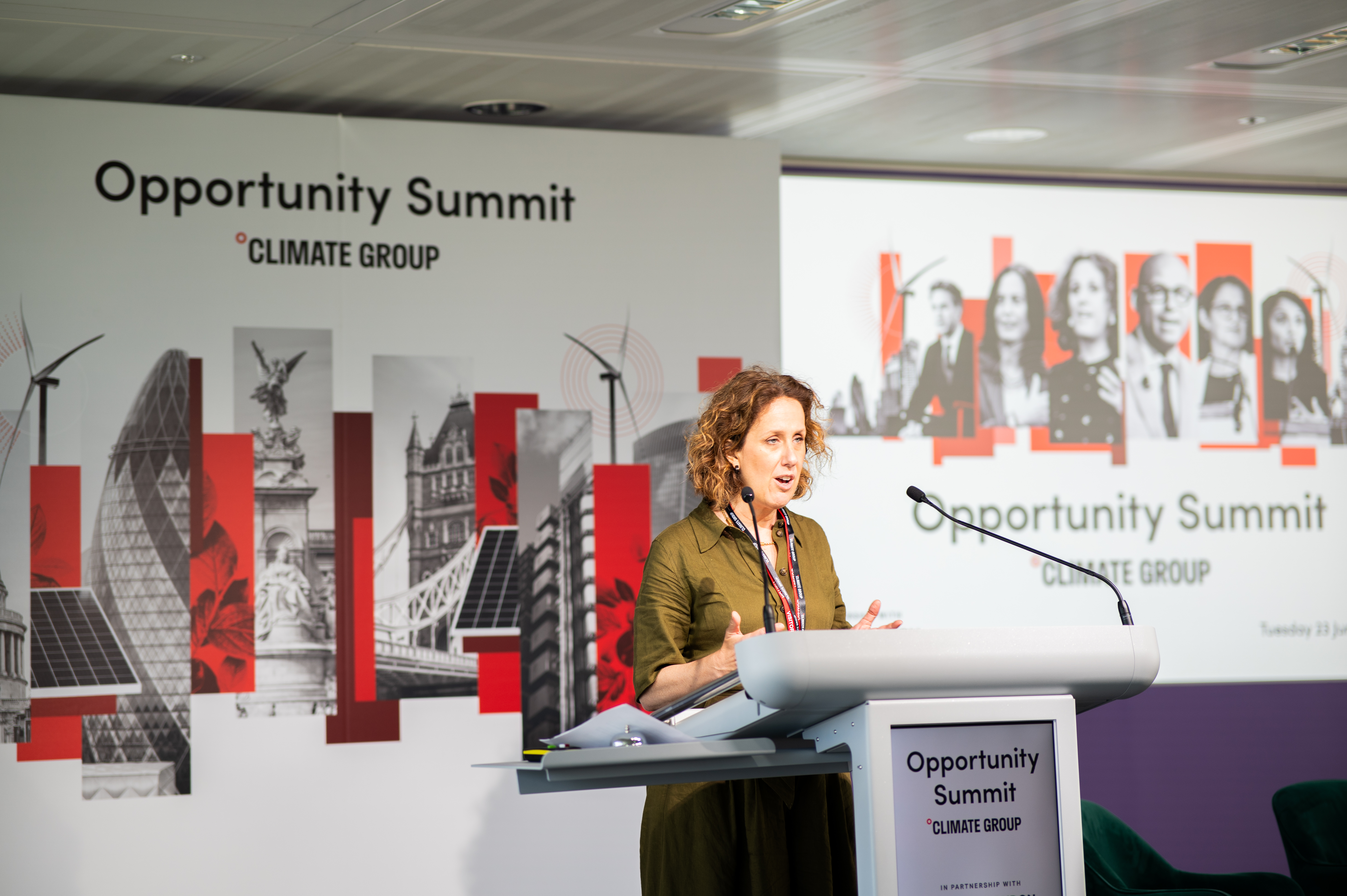
CEO Helen Clarkson launches Opportunity Summit, arming leaders with confidence and real-world outcomes
Good afternoon everyone.
It’s great to have you here at Climate Group’s first Opportunity Summit in partnership with the Mayor of London.
We all know how bleak the world is looking at the moment for humanity. I’m sure this isn’t the first event you’re attending this week, so I don’t need to rehearse everything you’ve already heard about the key issues like the Strait of Hormuz, AI, El Niño.
But what we’re here to focus on this afternoon is the opportunities there are and how we can harness them.
We also think it’s really important that our frame is Europe, not because we’re in denial on the 10th anniversary of the Brexit vote that it happened and what the outcome was, but because the UK is still in Europe and the EU remains our most important trading partner and security partner. The opportunity to engage and influence will surely grow in the coming years.
But it might seem strange to talk about opportunities when so many of the headlines right now are about the problems. For some reason the media and pundits are far more interested in arguments about why we can’t do something than whether we can. If, for example, if you feel your political relevance is fading, what better way to grab a quick headline than putting out a report saying Net Zero is impossible – just as an example?
I’m getting increasingly worried about these communications. Because of course if everyone says that Net Zero is impossible, then it definitely will be, and then you’ll get to have been right – albeit on a dead planet.
On the other hand, if we look for the opportunities in this transition – economic, societal, environmental – then we are much more likely to make them happen. And that’s what this afternoon is about.
But we also want you to take this afternoon into the wider week. Part of your role as climate opportunists is to beat back misinformation when you encounter it.
So before we get started, I wanted to give you five facts that are worth keeping in your back pocket this week, to take with you to your conversations across London.
1. For or every dollar invested globally in fossil fuels today, nearly two dollars are invested in clean energy.
Despite some of the strongest political backlash we’ve seen in decades, you can see that the money keeps moving in one main direction, and that’s clean energy.
Businesses and governments aren’t investing that capital for their moral conscience or even to get emissions down: it’s because it makes economic sense.
2. Asia is electrifying five times faster than the West.
That should drive us to think about why and drive us to do more because competition for investment, industry and growth is rising. Access to abundant, affordable, clean electricity is becoming a deciding factor in where businesses invest and grow. Right now, that investment is heading East.
Here’s a great UK one for all the net zero sceptics:
3. The UK's net zero economy now generates £105 billion and supports 1.1 million jobs.
This was a great report from the CBI a few weeks ago. So this isn’t just a theoretical future: the transition is creating some serious economic value, right here, today.
4. Wind and solar generated a record 30% of EU electricity last year, higher than fossil power for the first time on record. Almost 50% of the UK energy mix was from renewables in the past 12 months.
Renewables are generating more of our electricity than ever.
5. 90% of businesses have kept pace or increased their climate related investment over the past year.
I think these figures are useful because they help cut through some of the noise.
This transition is undeniably underway, with the COP31 Presidency calling for 35% of energy needs to be met with electricity by 2035. Up from 20% currently. Right now, governments and businesses are deciding how they secure clean power, attract investment and compete in a world that is racing towards electrification.
That's the context for today's discussions.
This afternoon you'll get insights on energy, investment, AI and implementation, and how they can help Europe and the UK’s competitiveness and economic opportunities.
You'll hear where barriers still exist, where progress is happening faster than expected, and where collaboration can help move things forward. And if you’re joining our roundtables, you’ll leave with some tangible actions and outcomes that will help you with your decisions.
Thank you to our sponsors and partners for making today possible, and to the Climate Group team for bringing us together.
I hope you enjoy the afternoon.