

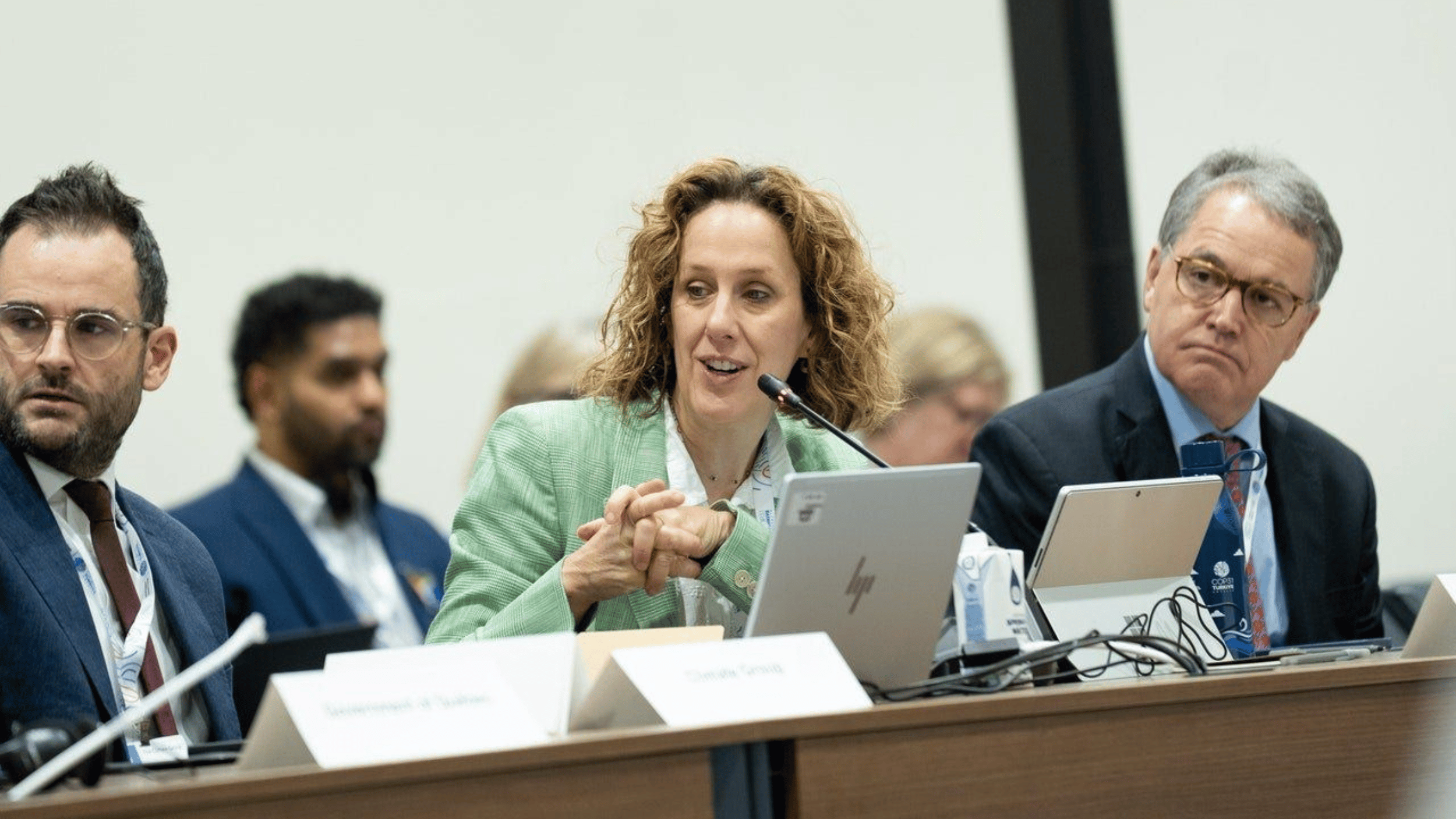
Helen Clarkson, OBE, CEO, Climate Group closing remarks at the first Subnational Investment Forum at COP31.
Welcome to this evening’s session of the Subnational Investment Forum. I want to reflect on what we need to take forward — not just into this evening’s session, but into the work that follows. This was the First Subnational Investment Forum at COP – we hope that it becomes a regular event.
Thank you to all our speakers, partners and everyone who has contributed to this morning’s two sessions.
We brought this Forum together to help turn the climate ambitions of states, regions and cities into projects that attract investment and deliver for communities. This morning’s discussions leave us with three clear messages to carry into this evening.
First: finance cannot be an afterthought. It has to be part of the conversation from the start.
That means bringing financial expertise into the room while projects are being designed — not waiting until the plans are finished to ask who will pay for them.
Who will use the infrastructure? Where will the revenue come from? What support is needed to move from an idea to a credible proposal? Asking those questions early can help us build projects that meet both community needs and the requirements of finance.
Second: governments have a vital role as coordinators, supporters of innovation and enablers of action.
States and regions can bring together the people who need to act: businesses, utilities, investors, national governments and communities. They can help align policy, infrastructure and investment, so that a promising project is not held back by a missing connection or an unresolved responsibility.
That is particularly important for electrification. Clean power, transport, buildings and industry cannot be planned in isolation. The task is to connect them — and to create the conditions in which businesses and communities can make the switch.
Third: there is no magic formula for making a project bankable. But there is no substitute for building relationships.
What works in one region or sector will not automatically work in another. Different contexts need different approaches.
That makes common understanding essential. Governments need to understand what investors require. Investors need to understand local priorities, institutions and constraints. And both need to understand what success looks like for the people a project is meant to serve.
This is not simply about exchanging business cards. It is about staying in the conversation long enough to identify an obstacle, find the right partner and agree a next step.
As we look ahead to this evening, let us take those three messages with us: bring finance in early; use government’s convening power; and build the relationships that turn shared ambition into investable projects.
I would like us to return with a practical question in mind: what is the next step that we can take together? A project that needs preparation support? A policy barrier we can help remove? A partnership that needs to move from an introduction to a working conversation?
I look forward to continuing the conversation — and turning it into action together.