Welcome to the Climate Group Asia Action Summit highlights blog, where you can find all the biggest updates from this year's event, as they unfolded on the ground in Singapore.
4pm
To round off the day, The Power Hour has commenced - a dynamic twist on the traditional networking drinks reception. Instead of leaving conversations to chance, The Power Hour is structured around topic tables, each hosted by a subject matter expert.
These tables give attendees the opportunity to dive into meaningful discussions, exchange insights, and build connections around shared interests.

3.38pm
Sam Kimmins, Director of Energy, Climate Group spoke about risks and game changers in the coming year.
“The biggest risk to the energy transition is apathy to deployment given distractions in the global economy. [...]
A connected market and aggregated demand will be incredibly important."
3.30
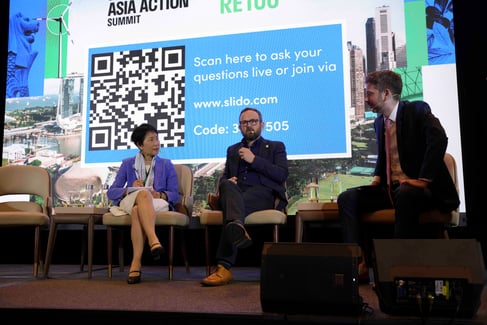
In a Q&A session - Strait talk – from Hormuz to Hanoi - Dr Naoko Ishii, Professor and Director, Center for Global Commons, The University of Tokyo spoke about the importance of a shared strategy.
"If you want to spark green industrialisation, batteries are an answer for sure. However, we need to assess the capability of each country, and to bring them together under a shared green industrial strategy.”
Stephen Stapczynski, Asia Energy, Team Leader, Bloomberg News flagged that, “Countries will hold onto their resources and products, effecting energy and supply chains on a global scale.”
3.05
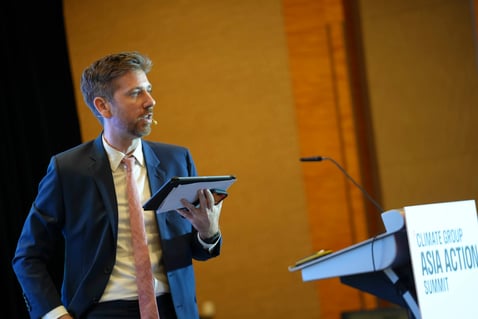
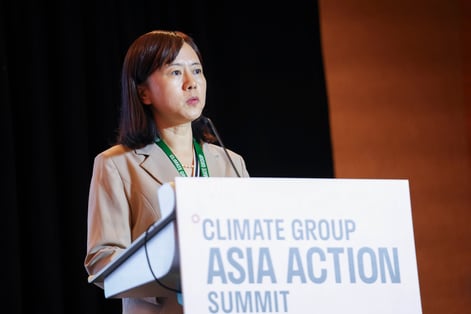
Kun Liu, Secretary General, China Council for the Promotion of International Trade Electric Power Industry Office gave a speech addressing China’s energy strategy for climate action.
"A green and low-carbon energy transition is the only way to achieve carbon neutrality. In 2021, China proposed building a new power system based on wind and solar energy. In 2022, China proposed accelerating the planning and construction of a new energy system, clearly defining wind, solar and hydrogen as the main energy sources. In 2026, China proposed accelerating the construction of a coordinated system of main, distribution and micro-energy sources. As of the end of April this year, China’s installed capacity of new energy sources reached 1.924 billion kilowatts."
2.45
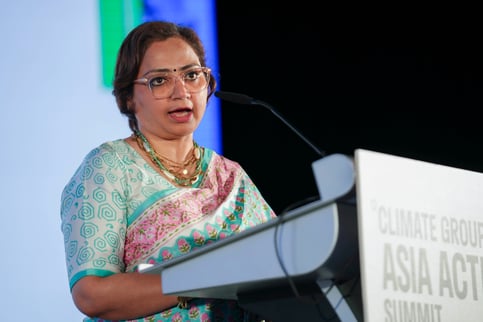
Divya Sharma, Executive Director for India, Climate Group shares a motivating speech on turning adaption into Asia’s next growth accelerator.
"The adaptation action of today, will form the resilience of the future. [...] In Asia, we don’t want to reinvent the wheel; we want to create a new trajectory."
2.40
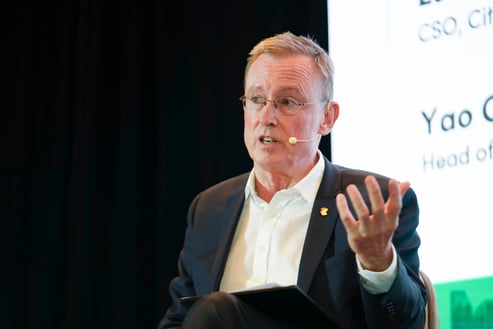
Martin Haese, Chair, Premier's Climate Change Council, South Australia shares an important learning from South Australia's journey to adopting renewables.
“Collaboration is absolutely critical, and South Australia would have achieved very little without it. It requires collaboration with government, at the local to national level, collaboration with industry, technology, policymakers, university researchers and academics. We’ve created an ecosystem of collaboration to discuss the green economy of South Australia.”
2.30
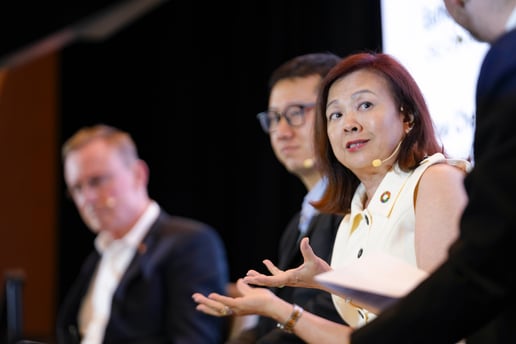
Esther An, CSO, City Development Limited addressed the challenges surrounding energy efficiency.
“Singapore is warming twice as fast as the global average. Yet, we don’t have enough land and rooftop space to build renewables to meet energy demands. We are therefore looking at energy efficiency which is being pushed by the government’s agenda."
2.26
Michael Wen, Executive Vice President, Cathay United Bank spoke about creating a blended finance for Asia.
"The very best solution is that [...] the fund is a composed of group expertise from six or seven countries in the region, so every deal can be small, but together it piles up to a very big amount, and that it’s managed by a group of experts.’
12.22
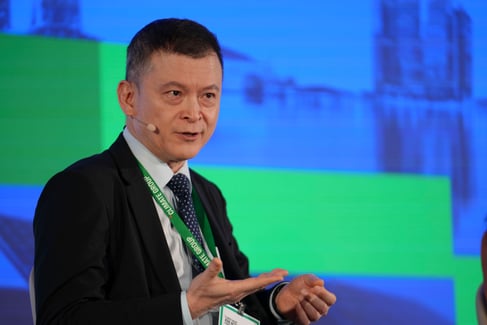
In a panel session on de-risking Asia’s climate investment landscape, Rebecca Mikula-Wright, CEO, Investor Group on Climate Change & Asia Investor Group on Climate Change spoke about the need for scalable solutions and market signals.
"In Asia, we’re going to see a 16% reduction in GDP by 2050 in line with the current climate change trajectories. [...]
You can’t divest away from climate change [...] Businesses are starting to think about how to change the system and create policy change and policy architecture to create those capital flows. [...] Asia is a bright spot in attracting investor confidence."

2.18
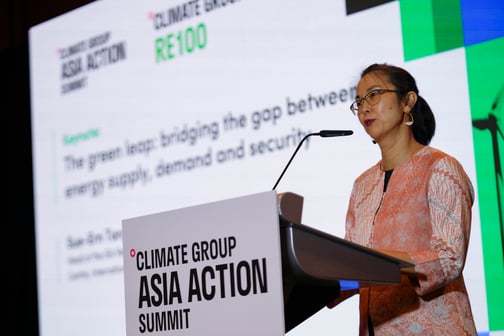
In a keynote on bridging the gap between energy supply, demand and security, Sue-Ern Tan, Head of the IEA Regional Cooperation Centre, International Energy Agency gave an overview of the energy landscape.
“APAC will account for 56% of global electricity demand by 2035. Most of this will be met with fossil fuels, and most countries are reliant on fossil fuel imports to meet their generation needs. [...]
For countries depending on energy imports, energy security is becoming intertwined with national security as well energy security.”
2.15
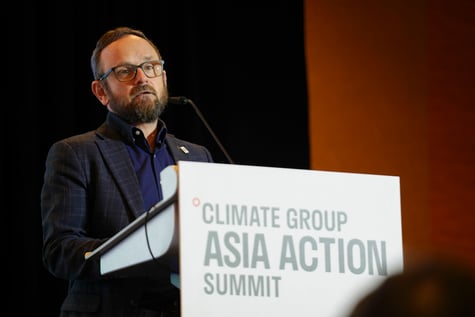
The Energy Stream opens with an RE100 welcome address from Sam Kimmins, Director of Energy, Climate Group.
"The ripple effect of the energy crisis impacts the whole economy, whether its food costs or transport costs. The answers are being deployed here in Asia faster than anywhere else. This has to be about structural changes so that markets are no longer subject to fossil fuel spikes. [...]
If RE100 was a country it would be the 10th largest by electricity demand. Over 200 RE100 members are headquartered in Asia. This is now the engine of change.”
2.10pm
The third and final part of the main plenary has begun with a session on building the environment for innovation to flourish.
Gina Domanig, Managing Partner, Emerald Technology Ventures shares inspiring thoughts on viewing adversity as an opportunity, and profitability vs impact in business.
"We are seeing larger corporates repositioning themselves for a new future."
12.58
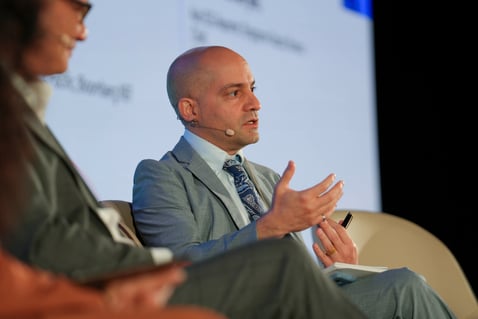
Ali Izadi, Head of Asia Pacific, Bloomberg NEF addresses the need for increasing supply:
"In South East Asia, over the last five years, date center capacity in the region has more than tripled. We're going to need data centers for many applications – not just AI, but also for things like cloud computing."
12.55
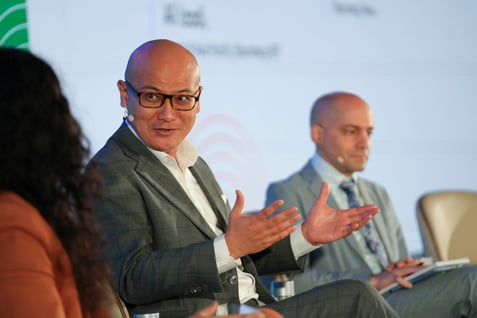
Asher Ling, CTO and General Manager of Singapore and Malaysia, Princeton Digital Group takes to the stage for an insightful session on greening Southeast Asia’s AI future.
"AI data centres can be the primer for kickstarting the next wave of investments into renewable or carbon-free energy generation. [...]
What we continue to demand from AI, we need to be able to ensure that we are able to sustainably provide, to operate it for our future generations”.
12.40
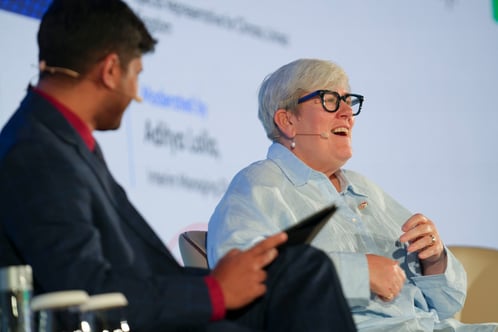
In a conversation about how international cooperation can accelerate clean energy delivery, Aditya Lolla, Interim Managing Director, Ember talks about Asia being the epicenter of climate impacts.
“Volatile geopolitics is shaping how we think about cooperating to accelerate clean energy delivery. [...]
The direction of travel is clear - the journey is what we have to define for ourselves.”
Rachel Kyte, Special Representative for Climate, United Kingdom agrees:
"Each of the countries in the region have their own dilemmas related to the energy crisis. What is the individual and regional support required? What can ASEAN provide for themselves and how can other countries provide support?"
12.30
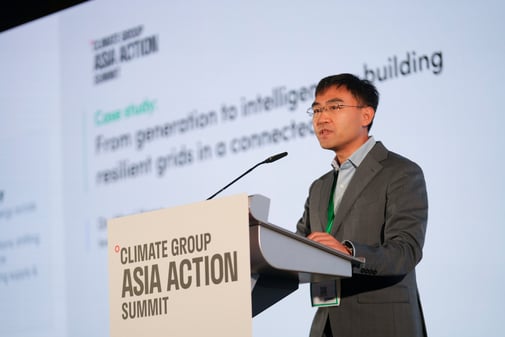
Dr. Muyi Yang, Senior Asia Analyst, Ember delivers a powerful case study: From generation to intelligence – building resilient grids in a connected Asia.
"You can redesign a power system but you can’t redesign the climate. That is why we need to adapt our power systems to new norms. [...]
The goal is not AI instead of planning, but AI-enabled planning at the speed and scale that climate adaptation now demands.”
12.22
Aditya Lolla, Interim Managing Director, Ember shares:
"Asia is ahead of the world when it comes to renewable energy share in primary energy [...] its solar is 10% which is higher than the rest of the world.
The focus now is on policymaking in the region to unlock faster electrification."
12.10pm
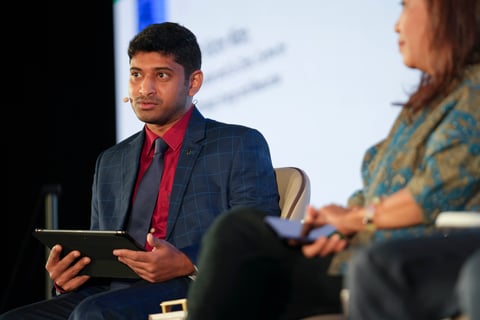
Sessions resume on our main stage with a conversation delving into: how fast can Asia electrify everything?
Suzanty Sitorus, Executive Director, ViriyaENB shares thoughts:
"Asia is not electrifying as a region but rather as a set of different countries with different situations and systems. [...]
Success needs to be more than numbers on a slide. Success looks like the driver of an electric bus who is proud of his job that didn’t exist a few years ago."
11.25
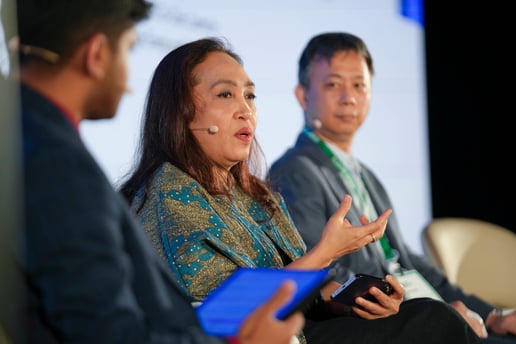
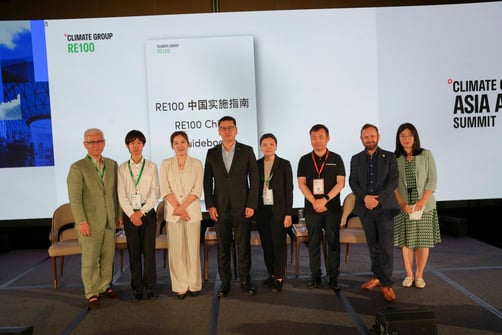
Climate Group China and the RE100 team launch the RE100 China Guidebook, providing practical guidance on renewable electricity procurement for companies operating in China.
Jia Wei, Head of Systems Change, China, Climate Group shared:
“We created this to give companies operating in China a practical resource explaining procurement pathways and real experience of companies.”
Sam Kimmins, Director of Energy, Climate Group marked the moment, saying:
“[The guidebook] is not only a signal that there is huge corporate demand in China, but that there are many pathways to procure renewable electricity.”
11.20am
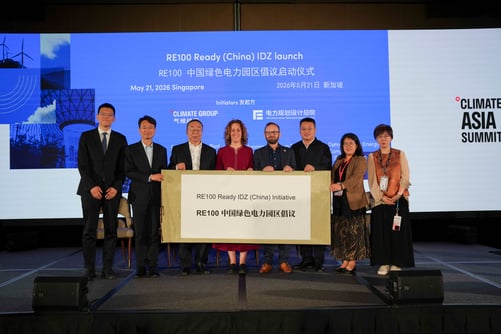
Climate Group and China Electric Power Planning & Engineering Institute (EPPEI), officially launch the RE100 Ready (China) IDZ Initiative on stage.
The initiative seeks to support participating Industrial Development Zones (IDZs) in exploring scalable approaches to renewable energy electricity adoption and green industrial transformation, with its framework anchored to the RE100 technical criteria while reflecting China’s evolving renewable electricity market mechanisms.
Helen Clarkson OBE, CEO, Climate Group shared:
“China IDZs are the engine of the economy [...] they're critical nodes in global supply chains. What happens there matters everywhere, and they’re one of the most important decarbonisation levers in the world.”
11am
Dan Li, Secretary General, Chinese Renewable Energy Industries Association (CREIA) shares how CREIA is working with climate organisations to promote the establishment of a green energy consumption alliance.
"We jointly organised this alliance with more than 40 organisations, which we call the International Energy Transformation Alliance.
We know that the Climate Group is constantly promoting the implementation of international projects like RE100 and EV100 [...] We believe that we need to form a collaborative effort, rather than each going our own way. So, we connected with Climate Group to build these foundations."
10.50
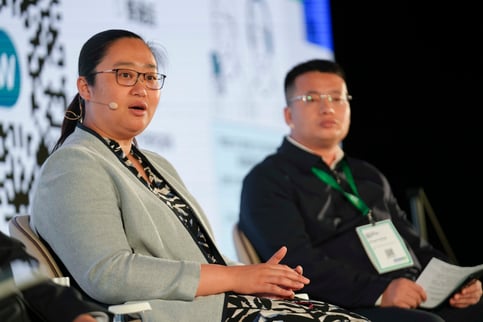
In a panel - How are Industrial Development Zones pioneering the future of green industry? - Pengfei Fan, Director Energy Policy and Market Institute, EPPI shares views on promoting the consumption of new energy and optimising an IDZ system.
"China’s strong green electricity consumption demand lies in its industrial parks, as these are where both the suppliers and off-takers of green energy are often located. [...]
Whether it's collaboration, economies of scale, or innovation incubation, it all reflects the very strong advantages of industrial parks to adopting green power methods."
10.50
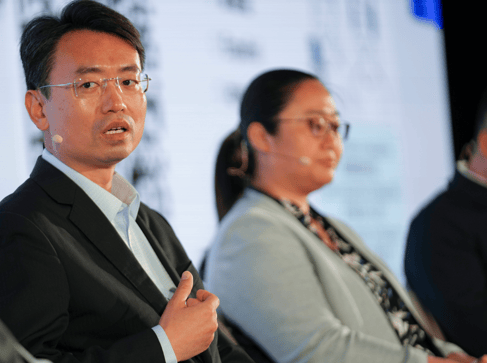
Hu Ming, President, China Electric Power Planning and Engineering Institute (EPPEI) gives a speech on the progress of renewables in China and Industrial Development Zones (IDZs).
"China’s installed power capacity has reached 3.89 billion kilowatts, and the proportion of renewable energy generation has increased from 45% to 50% in the past year. [...]
China aims to achieve its carbon peaking goals by 2030 and carbon neutrality by 2060 as scheduled."
10.38
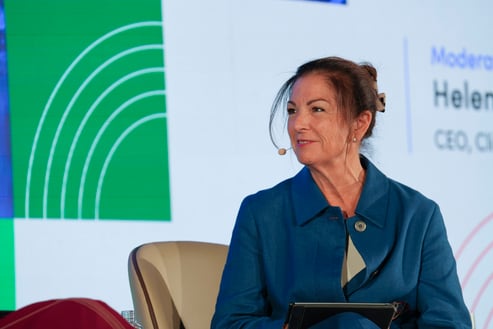
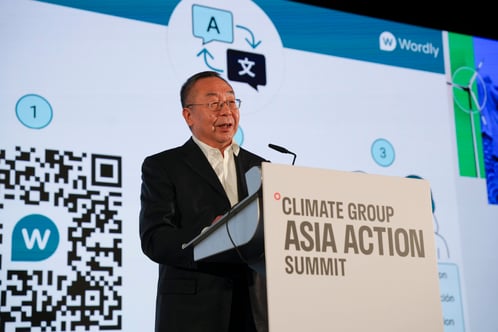
In a session on accelerating action in a fractured world, Helen Clarkson OBE, CEO, Climate Group addresses the most critical developments in the APAC region, highlighting the big change of the last year - rising energy demand.
"Accelerating renewable plans gets you out of the geopolitical mess, gives you that independence and a way out, and that’s quite exciting."

10.30
In response to what the most important priorities for policy markers, financiers and public institutions are, Dr Naoko Ishii, Professor and Director, Center for Global Commons, The University of Tokyo shares:
“What Asia is missing is the kind of confidence that we can make it happen together, and only together. [...] We have everything, but the political will to bring it all together is what is really missing."
10.22
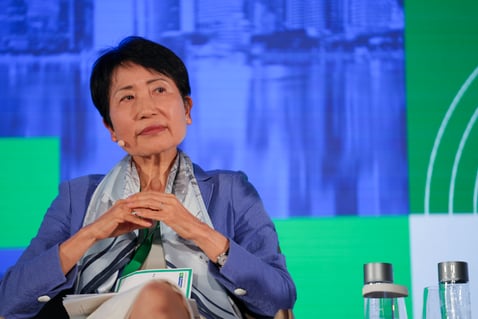
Peter Bakker, President, World Business Development Council for Sustainable Development discusses the long-term advantages of the energy transition.
“At the macro level, the Strait of Hormuz, has already cost more than 300 billion dollars to the EU. If the EU had invested that money in renewables, it would have had 53% less impact than the current crisis. This is how the long term view pays out.”

10.05
In our first panel - Asia’s acceleration playbook – what will it take to move Asia’s industrial transition to the next level? - Spencer Low, Head of Regional Sustainability, APAC, Google shares thoughts on how the green industrial transition can be accelerated.
"“There's a system set of friction points that are slowing down our best innovators. [...]
With Google DeepMind Accelerator [...] we want to work with innovators in the Asia-Pacific region using frontier models to drive innovations in clean energy, agriculture and water, so that we can help them scale in this market."

10am
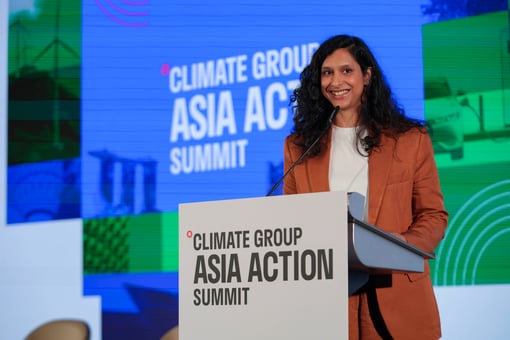
The main plenary begins with remarks from our host Ishika Mookerjee, Asia ESG & Climate Reporter, Bloomberg News, addressing the geopolitical landscape and the challenges and opportunities this poses to the energy transition.
8.15am
A technical workshop hosted by our RE100 team is in full swing. New for this year, this interactive session supports corporates to navigate complex renewables markets and renewable electricity purchasing through expert-led guidance.
8am
The first roundtable of the day Bridging Policy and Capital: Accelerating Subnational Climate Finance begins.
Subnational governments are key to delivering global climate goals, yet capital flows to subnational climate action remain insufficient, fragmented, and largely reactive.
This closed-door session convenes subnational leaders, financial and development institutions, and philanthropic and civil society organisations to discuss how to unlock capital and mobilise action at scale.